Blog Archives

Dr. Oz Metabolism Boosting Drink

For a powerful metabolism-boosting drink, try Dr. Oz’s Tangerine Weight-Orade. According to Dr. Oz, the Tangerine Weight-Orade is brimming with metabolism-boosting properties. The green tea is reported to boost metabolism by 12% and the tangerine has a chemical composition that increases sensitivity to insulin and stimulates genes that burn fat.
Tangerine Weight-Orade
Ingredients
- In a large pitcher, combine:
- 8 cups of brewed green tea
- 1 tangerine, sliced
- A handful of mint leaves
Instructions
1. Stir this delicious concoction up at night so all the flavors fuse together. Drink 1 pitcher daily for maximum metabolism-boosting results.
* Extra Tip – Dr. Oz’s website says that it’s fine to use mandarins instead of tangerines and if you can’t find either, use ripe oranges.

Stay The Course – Why Dieting Makes Us Fat
By Dr. Alexander Chernev, Author of The Dieter’s Paradox: Why Dieting Makes Us Fat, the following is an excerpt from the book. Dr. Chernev is a psychologist who is studying how people make choices.
 Weight Loss And You
Our weight-loss efforts are often derailed by our focus on short-term results and lack of commitment to a particular course of action. Even when we are devoted to the idea of dieting, we seem to have trouble staying loyal to the chosen dieting plan. The following strategies can help curb this consistency bias.
Control Mindless Habits
Mindless eating has become ingrained in our lifestyle. Too often we eat out of habit, grabbing things just because they’re out there in plain sight, waiting to be eaten. To get a grip on these subconscious impulses, make indulgences less frequent, less prominent, and less convenient. Avoid temptations by banishing them from your daily routine.
 Think Long Term
Our myopic focus on immediate results makes us seek drastic solutions, downplaying the effect of incremental changes. We fail to visualize the long-term impact of our short-term actions and refuse to believe that skipping a 400- calorie muffin every morning could reduce our annual calorie intake by as much as 150,000 calories (equal to the recommended calorie intake for 60 full days). Over the long run, small changes produce big results.

Set Actionable Goals
Having the vague goal of “dieting” without a defined action plan can hardly help one lose weight. To be actionable, goals need be specific: they must pinpoint the desired outcomes and set a time frame for achieving these outcomes. Writing down goals makes them easier to share, which further strengthens our commitment and makes us more accountable for reaching them. Set actionable goals and fortify your commitment by writing down and sharing these goals.
 Manage Variety
Variety can both facilitate and hamper weight-management efforts. Abundant variety makes us eager to try all the different options available and in many cases leads to overconsumption. Not enough variety can lead to boredom and increased consumption because lack of novelty blunts satisfaction and delays satiation. Introduce variety into your menu while controlling total consumption.

Think Carrots Not Sticks
Diets based only on inhibition are short-lived: they produce short-term results and are often followed by a rebound. (This is why many crash diets create repeat customers!) The goal is not to conquer the indulgent urges but to pacify them with sensible rewards. Focus on what to achieve, not just what to avoid.
 Think Beyond Consumption Episodes
Thinking about food in terms of consumption episodes makes us vulnerable to the “what-the-hell” effect. Once we break our diet, we consider the entire meal or event “spoiled” and consequently overindulge in the very behavior we’ve been trying to avoid. Break away from the “what-the-hell” mentality.
Copyright © Beliefnet, Inc. and/or its licensors. All rights reserved.

Diet-Busting Foods You Should Avoid

It really is a shame. Some of the best-tasting foods are actually some of the worst in terms of fat and calories. But it can be hard to avoid them, especially in places—like malls—where nutrition information usually isn’t available.
So we did the work for you; take a look at a list of foods you should skip—or pick—at a mall, restaurant, or grocery store.
(A 2,000-calorie-a-day diet should have no more than 66 grams of fat, less than 20 grams saturated; 2,400 milligrams of sodium; and 300 grams of total carbohydrate, including sugars.)
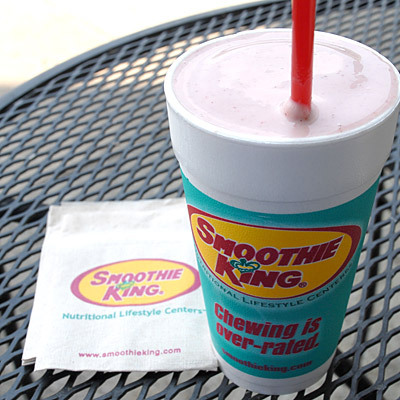 1. Smoothie King’s Hulk Strawberry Smoothie
Fruit and yogurt can’t be bad, right? Wrong. Smoothies are often made with ice cream or milk and can be crammed with sugar. At least this treat gives you a heads up: It’s listed on the menu as a smoothie for people looking to gain weight.
But the calories are excessive—more than two Big Macs put together. And that’s just the small.
One 20-ounce smoothie: 1,044 calories, 35g fat, 120g sugar.
Choose this instead: Low-Carb Strawberry smoothie: 268 calories, 9g fat, 3g sugar.

2. Starbucks’ Double Chocolaty Chip Frappuccino Blended Creme with Whipped Cream
Sure it sounds bad, but how bad is it? This afternoon pick-me-up delivers nearly one-third of the maximum fat you should consume in a day, and over half a day’s saturated fat.
One 16-ounce Grande: 510 calories; 19g fat, 11g saturated; 59g sugar; 300mg sodium.
Choose this instead: Your best bet is a regular cup of coffee without all the bells and whistles. If you just can’t live without a Frappuccino, make it a Coffee Frappuccino Light Blended Coffee: 130 calories, 0.5g fat, 16g sugar
 3. Coldstone’s PB&C Shake
Chances are you already suspect that milkshakes aren’t all that healthy. But this particular shake, made with chocolate ice cream, milk, and peanut butter, is in a class of its own. This frosty monster delivers an entire day’s worth of calories and almost three and a half times the daily limit for saturated fat.
One “Gotta Have It” (Coldstone speak for “large”): 2,010 calories; 131g fat, 68g saturated; 153g sugar.
Choose this instead: A better bet is the 16-ounce Sinless Oh Fudge! Shake, with the same chocolaty taste, but a quarter of the calories and only 2 grams of fat.

4. Auntie Anne’s Jumbo Pretzel Dog
Auntie Anne’s sells snacks, not meals. But this concoction—a Nathan’s hot dog wrapped in a pretzel bun—contains almost half your daily upper limit of fat and sodium.
One Jumbo Pretzel Dog with butter: 610 calories; 29g fat, 13g saturated; 1,150mg sodium.
Choose this instead: Go for the original pretzel without the butter and salt and you’ll whittle your treat down to 310 calories and only 1 gram of fat. Now that’s more like a snack!
 5. Cinnabon’s Caramel Pecanbon
The luring scent of Cinnabon is a mall staple. But just one of these decadent pastries means trouble. They deliver about half the calories and just about all the fat you should consume in a day.
One bun: 1,092 calories, 56g fat, 47g sugar.
Choose this instead: Cinnabon has no options that are particularly healthy, but you can try a Minibon, designed for smaller—and smarter—appetites: 300 calories, 11g fat.
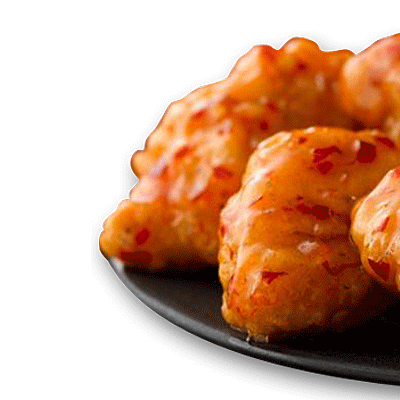
6. Wendy’s Sweet and Spicy Boneless Wings
In June, Wendy’s launched this item, claiming it was “as far as it gets from fast food.”
Calorie-wise, this meal isn’t that bad if it makes up your entire lunch. But it has more salt than you should have in a day, let alone at one sitting.
One order: 550 calories, 18g fat, 27g sugar, 2,530mg sodium.
Choose this instead: Try the Ultimate Chicken Grill, a grilled chicken breast on a sesame-seed bun: 320 calories, 7g fat, 8g sugar. Still, with 950 milligrams of sodium, don’t make it a daily habit.
 7. Dunkin’ Donuts’ Coffee Cake Muffin
Muffins are often mistaken for the doughnut’s healthy cousin. But muffins can be surprisingly high in fat.
This one is particularly offensive; you’d need to eat about three glazed donuts to match its nutrients and calories.
One muffin: 620 calories; 25g fat, 7g saturated; 54g sugar; 93g carbs.
Choose this instead: For an alternative—but equally decadent—breakfast treat, one glazed donut is a better bet: 220 calories, 9g fat, 12g sugar, 31g carbs.
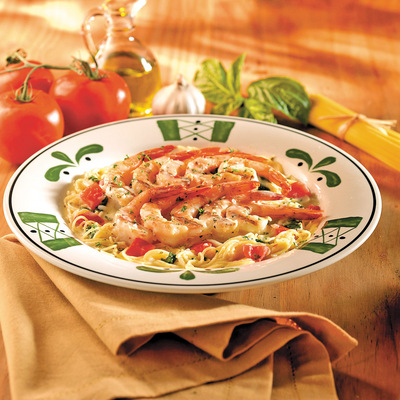
8. Olive Garden’s Grilled Shrimp Caprese
Shrimp are low-fat, low-cal, and high in protein and iron. What’s not to like?
In fact, the garlic-butter sauce in this dish helps rack up nearly two-thirds of your daily fat and about one and a half times your sodium limit.
One plate: 900 calories, 41g fat, 3,490mg sodium.
Choose this instead: Get a lighter version of this dish without the melted cheese and with marinara sauce on the side. The Venetian Apricot Chicken is another option; it has one-third the calories and 1/10 the fat, but still packs a good deal of sodium.
 9. Chili’s Onion String and Crispy Jalapeno Stack
Diners and bloggers alike were outraged by the fried-onion Chili’s appetizer, the Awesome Blossom.
The unhealthy behemoth was removed from the menu, but its replacement is only a bit better. This appetizer is meant to be shared, but even one-quarter of the dish delivers an entire day’s limit for fat.
One appetizer: 2,130 calories; 213g fat, 31g saturated; 1,320mg sodium.
Choose this instead: Chili’s doesn’t have particularly healthy appetizers. If you must have one, try the Chips and Hot Sauce (470 calories). However, the chips’ sodium is 2,790 milligrams—500 milligrams over the maximum daily intake.
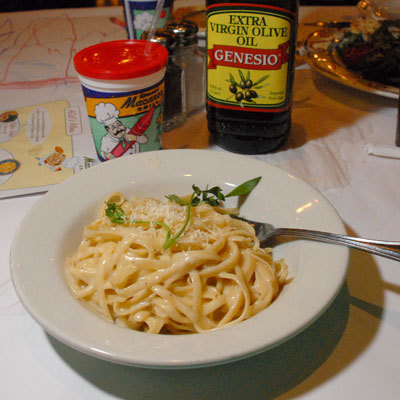
10. Macaroni Grill’s Kids’ Fettuccine Alfredo
Kids’ meals, in theory, are smaller than adult portions; children simply don’t need as many calories.
The average 10- to 12-year-old, the upper age limit for many kids’ menus, needs about 1,600 to 1,800 calories daily. This meal puts them at half of that, with more fat than a grown adult needs in a day.
One order: 890 calories, 67g fat, 1,480mg sodium.
Choose this instead: Coax your little ones into ordering the Grilled Chicken and Broccoli: 390 calories, 8g fat. It’s still high in sodium, so ask for sauce on the side and use sparingly.
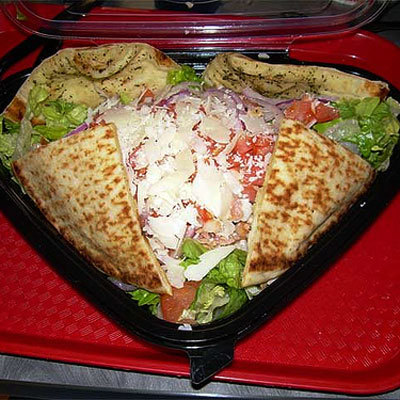 11. Quiznos’ Chicken With Honey Mustard Flatbread Salad
Unhealthy salads lurk everywhere. They promise grilled chicken, leafy greens, and fewer carbs, but often deliver bacon, cheddar cheese, and high-fat dressing.
Don’t be tricked; this salad will cost you half a day’s calories. The dressing alone has 48 grams of fat, nearly your daily max.
One salad, dressing and bread included: 1,070 calories, 71g fat, 1,770mg sodium.
Choose this instead: The Cantina Chicken Sammie, a 205-calorie, low-fat, veggie-filled flatbread sandwich: 455mg sodium, 12g protein.

12. Pizza Hut’s Meaty P’Zone
The TV commercials for this 1-pound monster feature hungry dudes who don’t want to share. One chows down and tells another, who looks on longingly, to order his own. But these pizza-crust calzones should be shared—preferably with a crowd. Eating the whole thing is akin to consuming about six cheese slices in one sitting, and it delivers one and a half times your daily limit for sodium. One serving size is one-half of a P’Zone.
One whole P’Zone: 1,480 calories, 66g fat, 3,680mg sodium.
Choose this instead: One slice of the Natural Veggie Lover’s multigrain crust pizza has 190 calories, 6g fat, 380 mg sodium, and 9g protein.
 13. Lunchables’ New Wholesome Deep Dish Pepperoni Fun Pack
Ideally, a lunch box should strike a balance between taste, fun, and nutrition.
However, an easy prepackaged solution like Lunchables may not deliver. The nutrition info is based on a 2,000-calorie-a-day diet—that of a grown adult. The processed food is too high in fat and sodium for the average 8-year-old’s daily recommended intakes.
One Fun Pack: 470 calories, 20g fat, 880mg sodium.
Choose this instead: For the same ease, try another variety of Wholesome Lunchables, like the Turkey and Cheddar Club, which comes with water and applesauce instead of cookies and fruit punch, and has 360 calories, 8 grams of fat, and 600 milligrams of sodium.
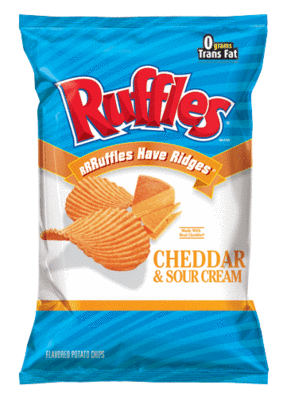
14. Ruffles’ Cheddar & Sour Cream Flavored Potato Chips
Ruffles don’t just have ridges, they’ve also have 17% of the upper limit of daily fat in just one serving. The calorie count is low, but chances are you’ll eat more than a serving, as most packages are the larger 1.5-ounce size.
The 1-ounce serving size: 160 calories, 11g fat, 230mg sodium. The larger size: 240 calories, 16.5g fat, 345mg sodium.
Choose this instead: Try Baked! Ruffles in the original flavor. The 1-ounce serving has 120 calories, 3 grams of fat, and 200 milligrams of sodium, plus 2 grams each of fiber and protein.
 15. Haagen Dazs’ Dulce de Leche Low-Fat Frozen Yogurt
Frozen yogurt is often relatively healthy; even the most decadent flavors tend to have less fat than ice cream.
However, not all fro-yo is created equal. To be fair, this flavor does have 15 grams less fat than the regular ice cream flavor, but one serving packs 25 grams of sugar.
One serving (1/2 cup): 190 calories, 2.5g fat, 25g sugar, 35g carbs.
Choose this instead: Try a brand that offers no-sugar-added options, such as Edy’s. The French Vanilla flavor has only 100 calories, 3 grams of fat, 14 grams of carbs, and 4 grams of sugar in a 1/2 cup serving.
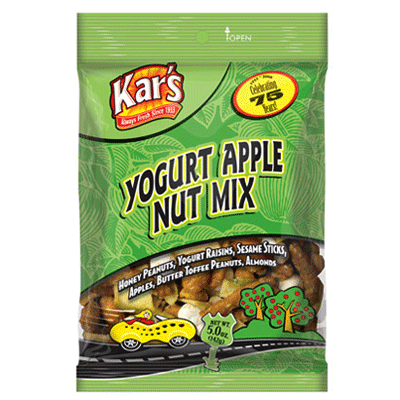
16. Kar’s Yogurt Apple Nut Mix
Words like yogurt, apple, and nut make this snack seem healthy. But a serving size is 1 ounce. The tiny snack, often found in vending machines, contains nearly three times as much—2.75 ounces. Bags in stores contain five times as much.
Eat a whole 2.75-ounce bag and you’ve consumed 412 calories—the equivalent of one and a half Snickers bars.
A 1-ounce serving: 150 calories; 10g of fat, 2.5g saturated; 90mg sodium; 3g protein; 2g fiber.
Choose this instead: Select a healthier trail mix, like Peeled Snacks. A 2/3-cup serving of the Fruit & Nuts FigSated mix has 150 calories and 6 grams of fat.
 17. Arnold’s Whole Grain Country White Bread
Don’t fall for the “whole grain” marketing trick without knowing all the facts.
While “whole grain” sounds good, this product doesn’t have nearly the amount of heart-healthy whole grains as products that say “100% whole grain.”
Two slices: 220 calories, 3g fat, 300mg sodium, 42g carbs, 4g fiber.
Choose this instead: Try two slices of Arnold’s Light line of breads, like the 100% Whole Wheat: 80 calories, 0.5g fat, 170mg sodium, 5g fiber. Or try the new Deli Flats from Pepperidge Farm. One 100% whole-wheat roll has 100 calories and 5 grams of fiber.

18. Reese’s Puffs Cereal
Starting your morning off with this bowl of sugary puffs may be worse than getting up on the wrong side of the bed. One serving of this breakfast treat has more sugar than an actual Reese’s Peanut Butter Cup.
A 3/4 cup serving with 1/2 cup skim milk: 160 calories, 3g fat, 12g sugar. (One Reese’s Cup has 7 grams of sugar.)
Choose this instead: For an organic and natural take on the peanut-buttery puff, check out EnviroKidz Peanut Butter Panda Puffs from Nature’s Path. The same serving size with milk has slightly more calories, but less sugar: 170 calories, 2.5g fat, 7g sugar.
 19. Kellogg’s Pop-Tarts Brown Sugar Cinnamon
At least breakfast cereals have relatively easy-to-understand serving sizes. Pop-Tarts, on the other hand, report nutrition information for one serving, but each package contains two—and is impossible to reseal.
Eat both, and this breakfast delivers a quarter of your daily limit for fat, and more than half your added sugar for the day.
Two pastries: 420 calories, 16g fat, 26g sugar, 66g carbs.
Choose this instead: Your best bet is to eat just one pastry. Or you can try Fiber One’s Brown Sugar Cinnamon Toaster Pastry: 190 calories, 4g fat, 16g sugar, 36g carbs, 5g fiber.

20. PowerBar Performance Energy Cookies & Cream
PowerBars are often shaped like candy bars and can taste like them too.
This particular PowerBar has only 1 gram of fiber and nearly three-fourths of the upper limit of daily added sugar, so there may be healthier options. (The USDA says to limit added sugar to 40 grams, or about 10 teaspoons, per day.)
One bar: 240 calories, 26g sugar, 45g carbs, 8g protein, less than 1g fiber.
Choose this instead: Try the PowerBar Harvest line. Made with whole grains, 1 Oatmeal Raisin Cookie bar still has 250 calories, 43 grams of carbs, and 22 grams of sugar, but offers 10 grams of protein and 5 grams of fiber, vitamins, and minerals.
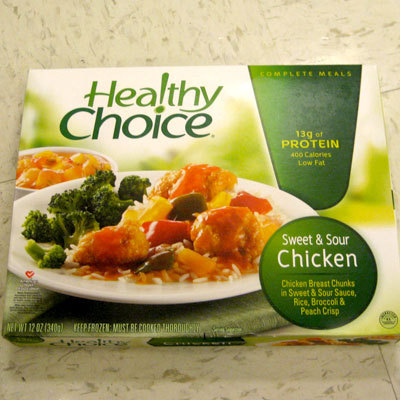 21. Healthy Choice Sweet and Sour Chicken
This meal is better than a TV dinner, but there are healthier options from this generally trustworthy brand.
The calories are reasonable, but the meal is high in sugar and sodium, and it has more fat than most other Healthy Choice options—even the Chicken Fettuccine Alfredo and the Country Breaded Chicken!
One meal: 400 calories, 13g protein, 5g fiber—but 10g fat, 20g sugar, 500mg sodium.
Choose this instead: The Oven Roasted Chicken meal: 260 calories, 5g fat, 9g sugar, 520mg sodium, 15g protein, 6g fiber.
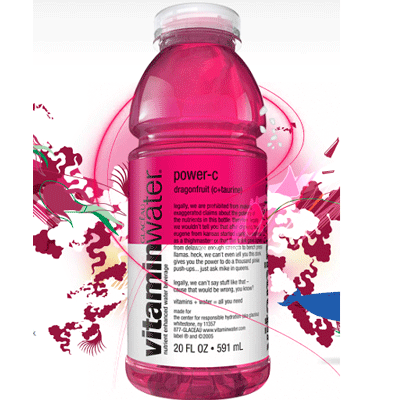
22. VitaminWater
VitaminWater uses the old trick in which the nutrition information on the label is based on a serving size, but the bottle contains multiple servings—leaving you to do the math.
Each bottle contains 2.5 servings of the sugar-sweetened water, so a whole bottle delivers 33 grams of sugar (a can of Coke only has 6 more). That’s a lot of calories when plain water could do the trick.
One bottle (2.5 servings) of the Charge flavor: 125 calories, 32.5g sugar.
Choose this instead: New VitaminWater10 has only 10 calories per serving, or 25 if you finish the bottle. But it contains zero-calorie sweeteners.
 23. Quaker Natural Granola, Low-Fat
Granola is tricky. Although the name is practically synonymous with healthy, some types—including this cereal—contain a startling amount of sugar per serving. One serving contains 18 grams of sugar, as much as a Twinkie.
A 2/3-cup serving: 210 calories, 3g fat, 4g protein, 3g fiber—but 18g sugar.
Choose this instead: A 2/3-cup serving of Health Valley’s Low Fat Date Almond Flavor Granola: 180 calories, 1g fat, 10g sugar, 5g protein, 6g fiber.
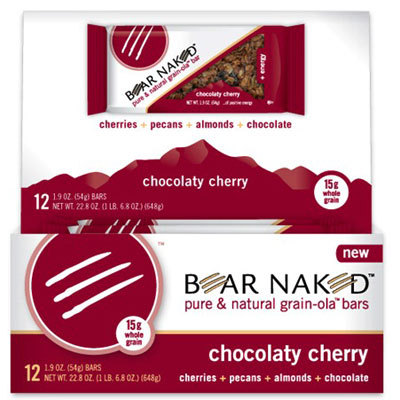
24. Bear Naked Chocolaty Cherry Grain-ola Bar
We love Bear Naked for its generally low-fat, low-sugar concoctions, but we just can’t get behind this bar.
It has almost the same nutritional stats as a Hershey’s Sweet and Salty Reese’s Peanut Butter bar. Or you could eat almost three Nature Valley Oats and Honey granola bars for the same intake.
One 54-gram bar: 230 calories, 10g fat, 14g sugar.
Choose this instead: Barbara’s Crunch Organic Oats and Honey Granola Bar; two bars have only 190 calories, 8 grams of fat, and 10 grams of sugar.
 25. Amy’s Organic Thai Coconut Soup
Generally we love anything from this vegetarian brand, but we have to draw the line at this soup. While packed with veggies and protein-powerhouse tofu, one serving has more than half of your daily limit of saturated fat and a quarter of your sodium.
One 1/2-can serving: 140 calories; 10g fat, 8g saturated; 580mg sodium.
Choose this instead: Lentil Vegetable, one of Amy’s low-sodium soups, is still chock-full of veggies and protein, but with less fat and sodium: 4g fat, 0.5g saturated fat; 340mg sodium.
Copyright © 2012 Yahoo! Inc. All rights reserved.

Relaxing Detox Bath
 I always did take and love baths growing up. And then college came along I turned into a shower-head. Well like I had a choice. Anywho, while on the quest of having better health I ran across the benefits of detox baths and thought this would be a great escape. I quickly discovered that a detox bath is thought to assist your body in eliminating toxins as well as absorbing the minerals and nutrients that are in the water. But most importantly, it will leave you feeling refreshed, renewed and awakened. Even if it’s only for a little while.
Who knew? Our parents sure did (LOL). That’s why we slept so good after a hot bath from a long day of play. And if you grew up in the era I grew up in; We stayed outdoors. So light some candles and pour yourself a glass of wine. It’s time to relax & melt your cares away. All in the name of DETOX that is!
Practically Functional Detox Bath Recipe:
1/3 C Epsom salts
1/3 C sea salt
1/3 C baking soda
2 1/2 t ground ginger
1 C apple cider vinegar
I hope you all enjoy and let me know how the detox experience turned out for you? I know you are going to love it!
Love You Much, Sunshine =)

How To Overcome An Addiction To Fast Food

Fast food has become a regular way of life for many people. Recent controversy over how unhealthy fast food is has led many individuals to start looking for effective ways to break their fast food habits. Regardless of why you indulge in your fast food addiction, it is important to understand that you can break the habit if you are willing to really put the effort in.
Examine Your Eating Habits
Step 1: Assess how often you stop at fast food places.
- A) Is it every day or several times per week?
- B) Do you find that your on-the-go lifestyle lands you in the fast food drive-thru more than once per day?
Step 2: Consider what time of day you are stopping at fast food restaurants.
- A) Do you grab a quick bite during your lunch break?
- B) Do you pick up a meal on your way home from work because so you don’t have to go home and make dinner?
- C) Does your morning routine include a fast food stop for breakfast on your way to work?
- D) Do you experience late night cravings that prompt you to get in your car and drive to the closest fast food place?
Step 3: Think about why you make the fast food stops. Identifying the underlying cause for your fast food addiction is an important step in breaking the habit.
 Begin With Acceptance
Step 1: Review your examination of your habits to determine whether you have an addition. Like just about any addiction out there, it is important to first recognize and understand that you do in fact have an addiction. Without acknowledging that there is a problem, you cannot get the help you need.
Step 2: Accept the fact that you may need to alter your eating habits.
Step 3: Acknowledge that you may have a bigger problem than you realized. For some people, it is an actual physical or physiological addiction that may require much more effort to curb rather than just accepting and altering diet and eating habits.
Start Investigating
Step 1: Begin adding up all of the money that you spend on fast food. Try saving the receipts for a few weeks or pay only with a debit card so that you can total your fast food expenses. Chances are that you will be surprised to see how much money you are actually spending. Consider how much you may be able to save by purchasing food that you can prepare yourself at home.
Step 2: Count all of the calories that you are consuming in the foods that you purchase from fast food places. Compare the ways that you can cut back on calories by preparing your own meals at home.
Step 3: Examine what foods you are craving. Do you have a strong desire for cheesy products, dairy items, or red meats? If certain foods seem to be on your list of must-haves, it may be your body’s way of telling you that it needs that particular ingredient. This can be due to a vitamin or mineral deficiency or from poor nutrition.
Step 4: Keep track of how often you are craving specific items. If there seems to be a pattern, you may want to discuss it with your health care provider in order to rule out any possible deficiencies.
Plan A Strategy
Step 1: Consider how you will fulfill your needs once you stop frequenting fast food places. Plan out what foods you will purchase from the supermarket to replace your fast food meals.
Step 2: Look at exactly what foods you are buying. Chances are that there are healthier options available for just about everything you are eating. Take the time to read and compare the food labels in order to choose the healthiest option available. It may be time consuming at first, but once you come to learn what the best choices are, shopping healthy will really be no different than your usual trip to the market. Keep in mind that the fresher the item, the more nutrition it offers.
Step 3: Alter your normal purchases by changing things up and opting for healthy snacks. In order to incorporate the healthiest options, you need to replace that bag of chips with a bag of nuts.
Step 4: Expect possible withdrawal symptoms when you stop eating certain foods or ingredients. Removing excess sugar from the body can leave you feeling tired. Lack of caffeine when the body is accustomed to it can lead to a headache. Know that your body will adjust to the change after several days.
 Eliminate
Step 1: Begin by removing soda from your beverage intake. For many individuals, this may prove to be the biggest challenge. Avoid all forms of soda. Diet and caffeine- free sodas are not really any better for you than regular soda. If this step proves to be very difficult, start off slowly. Begin decreasing the amount of soda you consume by replacing a few drinks here and there with a healthier option. Continue substituting other drinks for your soda until you are able to eliminate soda entirely.
Step 2: Stop bringing unhealthy snacks into your home. Replace as much junk food snacks as you can with healthy options. By incorporating new choices and eating them often, you are allowing your tastes to adjust to new flavors. You may actually come to have some new favorite snacks that are good for you.
Form New Habits
Step 1: Carry healthy snacks and drinks with you. Remember that you are trying to take the edge off your hunger. You do not want your snack to be your meal. If this proves to be a challenge for you, try bringing along a limited amount to snack on.
- A) Keep healthy, convenient snacks such as nuts or trail mix in the car.
- B) Purchase a small cooler if necessary. This is a great way to avoid a stop at a fast food place. Keeping it stocked with some yogurt, fresh fruits or carrots and ranch dip can help you to control your hunger until you are able to get home for your meal.
Step 2: Limit your indulgences. If you absolutely must have something that you know is not really good for you, try to keep the portion size small. Purchasing a single portion size rather than an entire box can be effective.
- A) If it is not possible to purchase small sizes and you are forced to buy a large portion, eat only a small amount and toss the rest out. You will want to eat it if you see that it is still available.
Step 3: Stay away from all-you-can-eat offers. Many individuals find that it is too difficult to avoid overindulging. Many people think that they have to get their money’s worth and choose to eat until they are so full that it is actually uncomfortable. All-you-can-eat buffets make most people want to sample a little bit of everything. This almost always leads to eating much more food than is reasonable.
Step 4: Stick to your plan and don’t give up just because you are having a hard time. An occasional lapse is no reason to beat yourself up. If you fall off the wagon, try again and get back on track with a bit more effort this time. It does get easier as time goes on.
TIPS
- Slowly eliminating one unhealthy food at a time is a gentle way to start cutting junk food out of your diet. Going cold turkey and cutting out all unhealthy food items at once can lead to unpleasant symptoms such as headaches and irritability, and makes you less likely to stick to your plan.
- If you and your friends are addicted to fast food, you can all give it up together. This way you will have less temptation than if your friends are chomping away on burgers in front of you. You may look into groups or networks of healthy people to surround yourself with to provide support through this important stage of life.
- Recommended reading: “Fast Food Nation”, by Eric Schlosser. This book gives you a sense of fast food’s effect on your health, and also its effects on the global economy, agriculture, immigrants, etc. You’ll think about this book when you feel tempted to go to the drive-through.
- Consider setting rules for yourself that will make fast food less convenient. For example, if your favorite fast food place is a long way away, only allow yourself to buy fast food if you walk there instead of driving. Not only will you get a healthy walk in if you do give in to the craving, but it will make cooking your own meal seem easier than the fast, greasy alternative.
- Putting some numbers to your fast food habit might make the reality sink in. Estimate or keep track of how much money you spend and how many calories you consume each week or month on fast food–it will shock you.
- Don’t treat this (or any dieting) a punishment or a hardship, otherwise your regimen will never last. The trick is to replace something that you may like with something healthy that you will like even more. Make this switch slowly, one piece at a time (for example, start by laying off the food court at lunchtime, or avoiding snacks between meals.) Make a small, but real change, and then move on to something more ambitious. Remember that you want this to be an entirely new lifestyle.
Source: wikiHow

DIY Monday: Homemade Lunchables
Re-blogged From: The CSI Project

Homemade Lunchables
By: Nike
I’m thrilled to be here sharing back to school ideas this morning to help me and my six kiddos this year!
So here’s the deal:
I have a love/hate relationship with my kids’ lunches.
I hate shopping trips with my kids begging for all the pricey, pre-packaged lunch stuff that’s loaded with preservatives and wasteful packaging.
Sheesh that junk is expensive.
But the convenience? Oh how I love the convenience.
And there are times of the year when our schedule is so crazy that I cave and load up the cart with lunchables, little bags of crackers and jello packs just so that we can pull a lunch or snack together in two seconds flat.
But no more!
I’m here today to share my plan to eat healthier, save money and still enjoy the convenience that me and my kids crave. And I hope you’ll tweak the ideas below to fit your family’s budget and nutritional preferences.
#1 – The Lunchable

Why?
Reusing the store bought tray and packing your own lunch meat, real cheese, crackers and a little treat will save you 40% — $0.60 for homemade vs. $1.00 for the store bought one. Plus the homemade version boasts real cheese, extra calcium and fewer preservatives.

A quick layer of Glad press ‘n’ seal or aluminum foil keep everything in place just like the original.
Don’t have a left-over lunchable tray? Or want a bigger tray to up the serving size for older kids?
No problem. You make your own dividers like I did for this dollar store container using an empty milk jug.

And that extra space means you can supplement that lunchable with some fruits and veggies without spending more than the store bought version.

Which $1 lunch would you rather send with your kids?

For a drink my kids prefer the juice pouch …

… while I’m more in favor of the reusable water bottle which make lunch $1.20 the first day and $0.98 every day after.

So we’ll do both: water most of the week and juice boxes on Friday for a little bit of a treat.
Either way these lunches come in significantly less than our $1.60 school lunch and WAY CHEAPER than the big-drink-included-lunchables at the store:

Really? $3.00 for a $1.00 lunchable and $2.00 juice pouch? Um, no thanks.
#2 – The Pudding & Jello Packs

Why?
Reusing those little cups (or the small tupperware containers with lids) and making your own will keep the cost and preservatives way down.

Same thing for the gelatin cups:

Making just this switch alone will save you a truck load. Six cents a cup vs. $0.56 for Jell-o brand? You could easily cover back-to-school paper supplies, back packs and shoes with just that little switch.

#3 – The Fruit Cups
The reduction in packaging, costs and preservatives make these easy switches.


#4 – The Mini Cracker Bags

You can enjoy the name brand crackers and still save almost 40% when you prepackage them yourself using $0.01 snack size sandwich bags. Just check out the cost per serving:

If you don’t mind generic, you can reduce those costs another 50+ percent.

And it’s just as convenient to grab a home-packed bag as the store packaged variety. The only difference is the price.

A few more THRIVE tips:
1. The ideas above are only guidelines. Each family will have their own nutrition and budget preferences. The idea is that by getting creative with recycled/reusable packaging, you can still enjoy the convenience of off-the-shelf while controlling costs and ingredients. So feel free to make your own tweaks with whole grain crackers, organic produce and nitrate-free meat. Or try packing a lunchable with mini tuna or PB&J sandwiches. Have fun!
2. Make your kids help with the prep work! They’re the ones asking for the “cool” packaging so they can help. It’s also a great way to teach basic food prep and math skills like measuring ingredients and dividing portions.
3. Have your kids help you shop! Don’t laugh — I’m serious. This is a fantastic chance to practice real life math skills as they determine price per unit, ounce or pound. There’s also lots of fun ways to to teach math, spelling and budgeting with kids during shopping trips here.
3. Have cheese for sandwiches or lunchables pre-sliced at the deli. I buy the economy loaves and have them sliced right there at the store for no extra charge. It saves so much time and keeps the portions equal.

4. Rock What Ya Got! If your kids are like mine and want the meat for their homemade lunchables to be round like the store bought variety, trying using the lid of a spice jar. (My cookie cutters aren’t the right size). Stack the meat in three layers and cut away. The lids from my 2/$1 Walmart spices worked perfectly.

And don’t toss those scraps! I save mine in a ziploc bag in the frig to use in omelets and salads.
5. Incorporate fresh produce from the garden! Now is a great time to up the nutrition with yummy, home ground fruits and veggies. I love it when I can ditch the high fructose corn syrup fruit snacks and send my kids with the homemade variety.

They have a soft, chewy texture like other dried fruits and are only $0.01 per serving vs. $0.20 for the cheapest store bought variety! You check out the recipe here.

Yum!
… and finally …
6. Pennies add up! I know some of you may look at $0.25 or $0.50 savings a day and think it’s not worth it. But trust me – it so is! My kids have been back to school for a month now (year round school) and I’ve kept track of what we would have spent to buy the prepackage stuff vs. packing our own. So far our averaging savings is around $8 a week.
If our family takes out the money saved each week and transfers it into savings (or puts it in an envelope Dave Ramsey style), that $8/week times 25 weeks of school should work out to $200 by the end of the year. And $200 divided between my four school-aged kids equals $50 a piece, or enough to buy a new pair of shoes, back pack and classroom supplies for each of them.
Eating healthier, using less packaging, teaching my kids about cooking-meal planning-math-budgetting AND financing back-to-school shopping for next year? That’s so worth it to me!
Hope you and your kids have fun shopping for your own creative ways to make smarter lunch choices! And be sure to stop by THRIVE for more ideas for living and crafting without spending a dime. Hope to see you soon!
COPYRIGHT © 2012 · GENESIS FRAMEWORK

Top 10 Reasons To Become A Vegetarian
Vegetarianism is not viewed to me as just a diet, but a different way of thinking, a different lifestyle. My overall goal is to share the passion of healthy living as well as to make this healthy lifestyle known to as many people as I possibly can. So join me today and become a part of the reasons. Reasons To Become A Vegetarian – No matter what type of Vegetarian you choose to be!
1. Live Longer
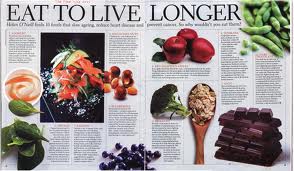
Numerous University studies have found that vegetarians live about seven years longer than non-vegetarians, and vegans live on average about 15 years longer than meat eaters. Studies such as these are further confirmed by the Chinese Health Project, which is the largest population study on diet and health to date. The Chinese Health Study found Chinese people who eat the least amount of fat and animal products have the lowest risk of heart attack, cancer, and other serious diseases.
In addition to this, proof comes from a British research group that tracked 6,000 Vegetarians and 5,000 meat eaters for 12 years to find that vegetarians were 40 percent less likely to die from cancer during that time and 20 percent less likely to die from other diseases. See the Vegetarian FAQ!
2. You’ll make regular visits to the restroom
Veggies are the best source for fiber, which pushes waste out of the body. Meat contains no fiber and collects against the walls of the digestive tract, which can lead to colon cancer. Studies done at Harvard and Brigham Women’s Hospital concluded that people who ate a high-fiber diet had a 42 percent lower risk of diverticulitis. People who eat a high percentage of vegetables in their diets also tend to have fewer counts of constipation, hemorrhoids and spastic colons.
 3. Healthy heart
Fruits and vegetables are loaded with antioxidant nutrients that protect the heart and the arteries. Fruits and vegetables contain no saturated fat or cholesterol.
The cholesterol levels for vegetarians are on average 14 percent lower than meat eaters. The American diet that is loaded with saturated fats and cholesterol from meat and dairy have made heart disease the number one killer in the United States.
4. Avoid toxic chemicals
95% of pesticide residue in the Western diet comes from meat, fish and dairy products. Seafood, in particular, contain carcinogens (PCBs, DDT) and heavy metals (mercury, arsenic; lead, cadmium) that cannot be removed through cooking or freezing. Meat and dairy products are also laced with steroids and hormones that are injected into the animals to combat disease.
5. You will give your body a detox
Fruit and vegetable juices contain phytochemicals that help our bodies detoxify naturally. Giving up meat helps rid the body of toxins (environmental pollutants, pesticides, and preservatives) that overload our systems and cause illness. Many of these additives cannot be assimilated and pool in various parts of the body.

6. Great Looking Body And Skinnier
A great reason to become Vegetarian is on average, most vegetarians are slimmer than meat eaters. Vegetarian diets are much lower in calories than the standard American diet. Vegetarians are also less likely to suffer from weight-related disorders like heart disease, stroke and diabetes. Vegetarian FAQ!
7. Save Lot’s of Money
By replacing meat, chicken and fish with vegetables and fruits, it is estimated to cut your food bill by an average of $4,000 a year.
8. Be environmental friendly
By being a Vegetarian you will help reduce waste and air pollution. A farms in Milford, Utah, which raises 2.5 million pigs yearly, produces more waste than the entire city of Los Angeles. And this is just one farm. Each year, our nation’s factory farms, collectively produce 2 billion tons of manure, a substance that’s rated by the Environmental Protection Agency (EPA) as one of the country’s top 10 pollutants. And that is not even taking in to account the amount of methane gas released by cows, pigs and poultry, which contributes to the greenhouse effect); the ammonia gases from urine; poison gases that emanate from manure lagoons; toxic chemicals from pesticides; and exhaust from farm equipment used to raise feed for animals.
 9. Vegetarians are More Efficient
Right now, 72% of all the grain that is produced in the United States is fed to animals, which are raised for slaughter. It takes about 15 pounds of feed to get one pound of meat. But if this same grain was given directly to people, there would be enough food to feed the entire planet. Using land for animal agriculture is inefficient in terms of maximizing food production. According to the journal of Soil and Water, one acre of land could produce 50,000 pounds of tomatoes, 40,000 pounds of potatoes, 30,000 pounds of carrots or just 250 pounds of beef. You do the math!
10. Its The Humane Thing To Do
Albert Einstein was quoted as saying “Our task must be to free ourselves… by widening our circle of compassion to embrace all living creatures and the whole of nature and its beauty. Nothing will benefit human health and increase chances of survival for life on earth as much as the evolution to a vegetarian diet.
FYI – Did you know that 22 million animals are slaughtered to support the American appetite for meat? It is a great feeling to finish a healthy meal knowing that no beings have suffered.
COPYRIGHT © 2009 – 2012 The Knowledge Source, LLC. All rights reserved.

5 Reasons To Go Meatless

It’s no secret that the American meat-heavy diet could use a serious overhaul. We consume nearly one and a half times more meat than most industrialized nations and use more than 50 percent of our water and land to raise livestock. This heavy reliance on animal protein is taking a toll on our health and contributing to a multitude of environmental concerns, including global warming, air and water pollution.
While a full vegetarian diet may seem a bit too extreme, here are five good reasons to consider going meatless, at least part of the time.
Health professionals have been warning us for some time now that diets high in meat load us down with saturated fat, increasing our risk for heart disease, diabetes and certain forms of cancer. According to Johns Hopkins School of Public Health, giving up meat even one day a week can reduce consumption of harmful fat by 15 percent. Further studies also point to a decreased risk of breast cancer in women who eat meat less frequently because saturated fat stimulates certain types of estrogen-receptive tumors.
Diets heavy in meat really rack up the grocery bill. Pound for pound, animal proteins cost three times the amount of beans or whole grains, and going meatless now and again can make a serious dent in your food budget. Unlike the minimal storage life of meat, canned or dried ingredients used in many vegetarian recipes stay fresh in your pantry for months at a time, making bulk purchasing a further savings for the savvy shopper.
Is there anyone out there who doesn’t need to watch calories? Going meatless can be very good for your waistline. Diets higher in complex carbohydrates (whole wheat, cornmeal, oats, potatoes, brown rice and beans) are low in fat and fill us up quickly, translating to lower calorie intake and fewer cravings between meals. Vegetarian meals are also richer in vitamins and minerals, especially when combined with plenty of fresh fruits and vegetables.
There is growing evidence that human resistance to certain antibiotics is linked to similar substances used to prevent illness and promote weight gain in animals raised in factory farms, where most commercial meat comes from. Limiting quantities of poultry and red meat can help protect our immune systems from harmful byproducts and even contagious disease.
Climate change and global warming are high on our list of worries these days, and many of us wonder how we can make a difference. According to the Environmental Defense Fund, if every American skipped just one serving of meat per week, this would be the same as taking 8 million cars off the road. This would reduce overall meat production and supply transport, thus reducing greenhouse gas emissions considerably.

If you are thinking about going meatless — at least some of the time — the trick is to shake up your menu gradually and experiment a bit. Start with one of your favorite recipes and see how simple it is to replace the meat with a vegetarian alternative. Beans make a delicious, protein-rich filling for Mexican favorites like tacos or burritos.
Try topping homemade pizza with portabella mushrooms instead of pepperoni or sausage. Don’t give up too many of the foods you enjoy — just be creative and learn to prepare them in new, healthier ways. Even moderate changes can make an enormous difference in your health and contribute to the welfare of our planet.
Source: Copyright © 2008-2012. All rights reserved. MyDailyMoment is a trademark of Flatiron Media, LLC.

10 Diabetes-Friendly Meals That Beat Belly Fat
These recipes are delicious: That’s the first thing you need to know. And we’re not talking “delicious for diabetes-friendly” food—no, these are good without any ifs or ands. The only but is that all 10 of the following recipes are especially formulated to help flatten your belly and fight diabetes. Some are loaded with fruits and veggies, others feature lean proteins or fish, some contain whole grains—and all have an added dash of monounsaturated fatty acids, or MUFAs (moo-fahs) for short, which help target belly fat, control blood sugar levels, and reduce insulin resistance.
Whether you’re craving French toast, pasta salad, or chicken parm these 10 meals will help keep your blood sugar steady, your taste buds happy and your belly nice and slim.
1. Strawberry Almond French Toast: It’s the quintessential Sunday morning breakfast—with a twist: Swap standard white for whole grain bread (one study showed that simple step could reduce your risk of type 2 diabetes by up to 20%); and top your toast with strawberries (which research suggests helps regulate blood sugar) and MUFA-rich almonds.
INGREDIENTS
- 1 egg
- 1/4 cup fat-free milk
- 1/4 teaspoon ground cinnamon
- 1 slice whole grain bread
- 1 teaspoon trans-free margarine
- 1/2 cup sliced strawberries
- 2 tablespoons sliced almonds, toasted
INSTRUCTIONS
1. Beat the egg in a shallow bowl with the milk and cinnamon. Dip both sides of the bread in the egg mixture.
2. Melt the margarine in a nonstick skillet over medium heat. Cook the bread for about 2 to 3 minutes per side, or until golden. Cut in half diagonally.
3. Place half on a plate. Top with half of the strawberries and almonds. Cover with the other toast half and the remaining strawberries and almonds.
*Chef’s Note – MAKE IT A FLAT BELLY DIET MEAL: Serve with 3 slices Applegate Farms Organic Turkey Bacon (105).
NUTRITIONAL FACTS PER SERVING
CALORIES ~ 303.9 CAL
FAT ~ 15.7 G
SATURATED FAT ~ 3.2 G
SODIUM ~ 267.9 MG
CARBOHYDRATES ~ 26.1 G
TOTAL SUGARS ~ 9.4 G
DIETARY FIBER ~ 5.4 G
PROTEIN ~ 15.8 G
2. Tortellini Pasta Salad: Yes, you can most definitely still have pasta—just bulk up the dish with nutrient-rich vegetables, like broccoli— it’s packed with cancer-fighting vitamin A and it’s a good source of fiber, which helps slow the rise of blood sugar after you eat. Stir in belly-flattening olives and 2 tablespoons of pesto for extra flavor and more MUFAs.
INGREDIENTS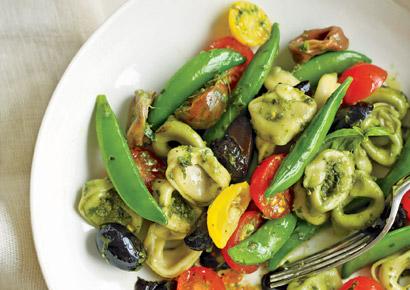
- 1 package (9 ounces) refrigerated tricolor cheese tortellini
- 2 cups trimmed sugar snap peas
- 2 cups baby carrots
- 2 cups broccoli florets
- 2 tablespoons pesto
- 1 cup cherry tomatoes, halved
- 40 chopped black olives
- 1/4 teaspoon ground black pepper
- fresh basil (optional)
INSTRUCTIONS
1. Place the tortellini into a large pot of boiling water. Cook according to package directions, stirring occasionally. Add the sugar snap peas, carrots, and broccoli and cook for the last 3 minutes, or until tender but still crisp.
2. Drain the pasta and vegetables, and rinse with cold water. Place into a large bowl and toss with the pesto. Gently fold in the tomatoes, olives, and pepper. Garnish with basil, if using.
*Chef’s Notes – A SINGLE SERVING OF THIS RECIPE COUNTS as a Flat Belly Diet Meal without any add-ons.
NUTRITIONAL FACTS PER SERVING
CALORIES ~ 366.7 CAL
FAT ~ 13.1 G
SATURATED FAT ~ 3.9 G
SODIUM ~ 776.1 MG
CARBOHYDRATES ~ 50.2 G
TOTAL SUGARS ~ 8.7 G
DIETARY FIBER ~ 8 G
PROTEIN ~ 14.7 G
3. Guacamole and Chips: You’ve heard people say avocado is full of “good” fat, but do you know how good it is? Research suggests MUFAs (found in avocados and other foods) not only help you lose weight and shrink belly fat, but they specifically reduce visceral belly fat—the dangerous kind found deep in your abdomen and strongly associated with prediabetes and diabetes. That’s good stuff. So enjoy your guac, but skip the store-bought chips (even if they come in a cool shape); instead, slice healthier whole wheat tortillas into wedges and bake until crisp and almost puffy.
INGREDIENTS
- 2 cups mashed Hass avocado
- 1 large tomato, chopped
- 1/4 white onion, diced
- 1/4 cup chopped fresh cilantro
- 1/4 cup freshly squeezed lime juice
- 1 fresh jalapeno chile pepper, minced (wear gloves when handling)
- 1/4 teaspoon salt
- 1/2 teaspoon green or red hot sauce, such as tabasco (optional)
- 8 whole wheat tortillas (8″ diameter)
- vegetable oil spray
- chili powder
INSTRUCTIONS
1. Place the avocado, tomato, onion, cilantro, lime juice, pepper, salt, and hot sauce (if using) in a medium bowl. Stir until combined.
2. Preheat the oven to 350°F. Spread the tortillas on a work surface. Coat lightly with vegetable oil spray. Sprinkle lightly with chili powder. Flip the tortillas and repeat with the spray and chili powder.
3. Place the tortillas in a stack. With a serrated knife, cut the stack into 8 equal wedges. Spread the triangles out on a baking sheet or sheets so they are not touching. Bake for about 10 minutes, or until crisp and starting to puff. Let stand to cool. Serve right away with the guacamole or store in an airtight container.
*Chef’s Notes – MAKE IT A FLAT BELLY DIET MEAL: Serve with 1/2 cup mashed black beans (110) and 1/2 fresh mango (67).
NUTRITIONAL FACTS PER SERVING
CALORIES ~ 205.4 CAL
FAT ~ 10.8 G
SATURATED FAT ~ 1.2 G
SODIUM ~ 352.1 MG
CARBOHYDRATES ~ 23.3 G
TOTAL SUGARS ~ 2.1 G
DIETARY FIBER ~ 5.8 G
PROTEIN ~ 4.5 G
4. Salmon Sandwiches: Salmon is an excellent source of omega-3. Omega-3s help cool chronic inflammation in the body, a major contributor to age-related conditions like insulin resistance and diabetes. Plus, studies show consuming healthy amounts of fish significantly reduces your risk of heart disease. Stick to two servings a week—and choose the kinds with lower levels of toxins, like wild salmon (available in less expensive cans versus pricier fillets), as well as mackerel and herring.
INGREDIENTS
- 1/4 cup canola oil mayonnaise
- 1/2 teaspoon wasabi paste
- 2 cups (14.75-ounce can) canned Alaskan wild salmon, drained
- 8 thin slices 100% whole wheat bread, toasted
- 4 thin slices red onion
- 4 thin rings red bell pepper
- 4 teaspoons sliced pickled ginger
- 1 cup arugula
INSTRUCTIONS
1. Combine the mayonnaise and 1/4 teaspoon of the wasabi paste and stir until smooth. Add more wasabi, if desired, to suit your taste. Gently fold in the salmon.
2. Place 4 slices of the bread on a work surface and top each with 1/2 cup of the salmon mixture, 1 onion slice separated into rings, 1 pepper ring, 1 teaspoon ginger, and 1/4 cup arugula. Top with the remaining 4 slices of bread.
*Chef’s Notes – MAKE IT A FLAT BELLY DIET MEAL: Serve with 1/4 cup frozen, thawed shelled edamame (61).
NUTRITIONAL FACTS PER SERVING
CALORIES ~ 345.5 CAL
FAT ~ 15.8 G
SATURATED FAT ~ 1 G
SODIUM ~ 608.8 MG
CARBOHYDRATES ~ 27.7 G
TOTAL SUGARS ~ 4.9 G
DIETARY FIBER ~ 4.7 G
PROTEIN ~ 19.4 G
5. Chicken Parmesan: Mix finely chopped pine nuts into the bread crumbs before coating the cutlets for an extra boost of MUFAs. A large international study found people with type 2 diabetes who followed a Mediterranean-style diet enriched with MUFAs dropped fasting blood sugar levels by up to 30 points—that’s enough to perhaps reduce doses of diabetes medications, or even eliminate them altogether. Make the bread crumbs whole wheat and you help protect your heart, too.
INGREDIENTS
1 egg
1 tablespoon water
1/2 cup pine nuts, finely chopped
1/4 cup whole wheat bread crumbs
1/2 teaspoon italian seasoning
4 chicken cutlets (about 3 ounces each)
2 cups prepared marinara sauce
1/4 cup shredded part-skim mozzarella cheese (about 2 ounces)
INSTRUCTIONS
1. Preheat the oven to 425°F. Coat a baking sheet with cooking spray.
2. Whisk the egg with the water in a shallow dish. Combine the pine nuts, bread crumbs, and seasoning in another shallow dish. Dip the chicken into the egg and then the nut mixture. Place the chicken on the prepared baking sheet.
3. Bake for 10 minutes. Turn the chicken over and top each with 1/2 cup of the marinara sauce and some of the cheese. Bake for 5 to 10 minutes longer, or until the cheese has melted and the chicken is cooked through.
*Chef’s Notes – MAKE IT A FLAT BELLY DIET MEAL: Serve with 2 cups steamed spaghetti squash (84).
NUTRITIONAL FACTS PER SERVING
CALORIES ~ 327.8 CAL
FAT ~ 18.3 G
SATURATED FAT ~ 3.1 G
SODIUM ~ 680.7 MG
CARBOHYDRATES ~ 14.5 G
TOTAL SUGARS ~ 1.1 G
DIETARY FIBER ~ 2.9 G
PROTEIN ~ 28.9 G
6. Greek Eggplant Casserole: The Greeks like beef in their casserole, so don’t skimp—the meat is good for you. Studies show diets high in protein help you better manage blood sugar. (The fiber in eggplants does, too.) Plus, protein contains an amino acid called leucine that helps preserve more muscle when you diet—the more muscle you have, the more calories your body burns all day Just be sure to choose 97% lean ground beef to limit unhealthy saturated fat.
INGREDIENTS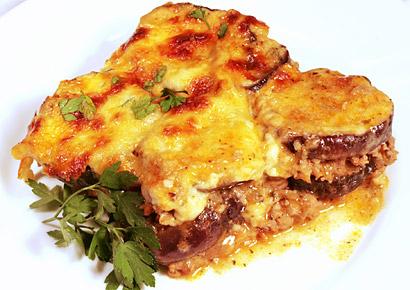
- 1 onion, chopped
- 2 cloves garlic, minced
- 3/4 pound 97% lean ground beef
- 1 can (14 1/2 ounces) no-salt-added diced tomatoes
- 1/4 cup tomato paste
- 1/2 teaspoon ground cinnamon
- 1/4 teaspoon ground allspice
- 2 eggplants, peeled and cut lengthwise into 1/4″-thick slices
- 6 tablespoons safflower oil
- 2 cups 1% milk
- 3 tablespoons cornstarch
- 1/2 cup grated Romano cheese
INSTRUCTIONS
1. Heat the broiler. Coat a 9″ x 9″ baking dish and a large baking sheet with olive oil cooking spray.
2. Heat a large skillet coated with cooking spray over medium-high heat. Cook the onion and garlic for 3 minutes, or until the onion begins to soften. Add the beef and cook for 5 to 7 minutes, stirring often, or until the beef is browned and cooked through. Stir in the tomatoes (with juice), tomato paste, cinnamon, and allspice. Bring to a boil. Reduce the heat to low and simmer for 10 minutes.
3. Place half of the eggplant on the prepared baking sheet and brush with 3 tablespoons of the oil. Broil 6″ from the heat for 10 minutes or until browned, turning once. Repeat.
4. Whisk together the milk and cornstarch in a small saucepan. Bring to a simmer over medium heat and cook, whisking, for 8 minutes, or until thickened. Remove from the heat and stir in the cheese.
5. Layer half of the eggplant in the baking dish, then half of the meat sauce. Repeat. Spread the cheese sauce on top. Broil for 3 minutes, or until just starting to brown.
*Chef’s Notes – MAKE IT A FLAT BELLY DIET MEAL: Serve with 1/2 cup fat-free Greek-style yogurt (60).
NUTRITIONAL FACTS PER SERVING
CALORIES ~ 341.9 CAL
FAT ~ 19.9 G
SATURATED FAT ~ 4.4 G
SODIUM ~ 339.6 MG
CARBOHYDRATES ~ 20.7 G
TOTAL SUGARS ~ 10.5 G
DIETARY FIBER ~ 5.3 G
PROTEIN ~ 19.7 G
7. Barbecue Pulled Pork: It’s hearty, full of flavor, and feels totally indulgent, but the nutrition facts prove otherwise: This barbecue pork recipe is just over 400 calories per serving (a good amount for a healthy meal) and packed with satisfying protein, and the healthy fats in the olive oil may help reduce metabolic syndrome, according to a Spanish study of over 1,200 adults. Metabolic syndrome is a cluster of conditions that lead to prediabetes and diabetes, as well as heart disease and stroke. Just be sure to plan ahead for this one—the meat needs to slow-cook for almost 2 hours.
INGREDIENTS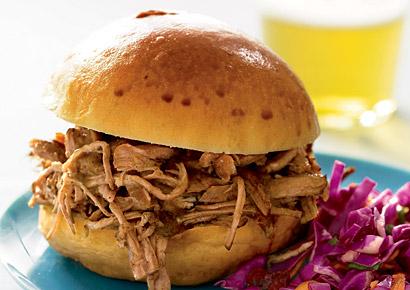
- 6 tablespoons olive oil
- 1 1/2 pounds boneless pork loin, trimmed of all visible fat
- 1 medium onion, chopped (about 1/2 cup)
- 2/3 cup ketchup
- 1 tablespoon cider vinegar
- 1 tablespoon molasses
- 2 teaspoons packed brown sugar
- 2 teaspoons mustard powder
- 1 1/2 teaspoons garlic powder
- 1 teaspoon worcestershire sauce
- 1/4 teaspoon freshly ground black pepper
- 1 1/2 cups chicken or vegetable broth
- 6 whole wheat hamburger buns
INSTRUCTIONS
1. Heat the oil in a 4- to 6-quart pot over medium-high heat. Add the pork loin and brown, turning occasionally, for 5 minutes.
2. Add the onion and cook for 5 minutes more, or until the onion starts to turn golden. Add the ketchup, vinegar, molasses, sugar, mustard powder, garlic powder, Worcestershire sauce, black pepper, and broth.
3. Stir well to combine and bring to a boil over medium-high heat. Reduce the heat to low, cover, and simmer, stirring occasionally, for 1 1/2 hours.
4. Uncover the pot and simmer 10 minutes longer, or until the sauce has thickened slightly and the pork is very tender. Remove from the heat.
5. Pull the pork into shreds with two forks and serve on whole wheat hamburger buns.
*Chef’s Notes – A SINGLE SERVING OF THIS RECIPE COUNTS as a Flat Belly Diet Meal without any add-ons!
NUTRITIONAL FACTS PER SERVING
CALORIES ~ 419.1 CAL
FAT ~ 18.7 G
SATURATED FAT ~ 3 G
SODIUM ~ 807.5 MG
CARBOHYDRATES ~ 35.4 G
TOTAL SUGARS ~ 14.1 G
DIETARY FIBER ~ 3.8 G
PROTEIN ~ 28.9 G
8. Mexican Stuffed Peppers: Jalapeño peppers and chili powder give this veggie dish some Mexican heat; the cheese gives you calcium to build strong bones and burn more fat; the brown rice gives your body insoluble fiber to help keep blood sugar steady; and the tomatoes provide carotenoids that help protect against cancer.
INGREDIENTS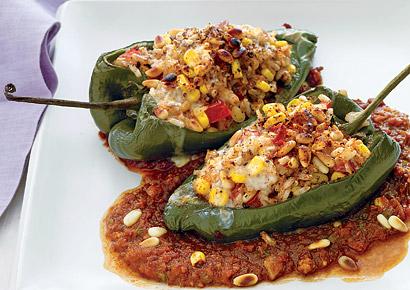
- 1/2 cup pine nuts
- 1 jalapeno chile pepper, stemmed, halved, and seeded (wear plastic gloves when handling)
- 2 large cloves garlic
- 1 can (14 1/2 ounces) no-salt-added stewed tomatoes
- 1/4 cup vegetable broth or water
- 2 tablespoons chili powder
- 2 cups cooked brown rice
- 3/4 cup frozen corn kernels
- 2 plum tomatoes, chopped
- 1/2 onion, chopped
- 2 egg whites
- 1/4 teaspoon salt
- 4 large poblano or Cubanelle peppers
- 3/4 cup shredded reduced-fat monterey jack cheese
INSTRUCTIONS
1. Preheat the oven to 400°F. Put the pine nuts in a small baking dish or skillet for about 8 minutes to lightly toast while the oven heats. Tip onto a plate.
2. Combine the jalapeno pepper, garlic, stewed tomatoes with juice, broth or water, and 1 tablespoon plus 2 teaspoons of the chili powder in the bowl of a food processor fitted with a metal blade. Process to a medium-coarse texture. Pour into a 9″ x 13″ glass baking dish and set aside.
3. Mix the rice, corn, plum tomatoes, onion, egg whites, salt, toasted nuts, and remaining 1 teaspoon chili powder in a medium bowl. Halve the poblano or Cubanelle peppers lengthwise and remove the stems and seeds. Spoon about 1/2 cup of the stuffing into each pepper half and place stuffed side up in the reserved sauce in the baking dish.
4. Cover the dish with foil and bake for 40 to 45 minutes, or until the peppers are tender.
5. Remove the foil and sprinkle the peppers evenly with the cheese. Bake for 5 to 8 minutes longer, or until the cheese has melted. Serve the peppers with the sauce.
*Chef’s Notes – A SINGLE SERVING OF THIS RECIPE COUNTS as a Flat Belly Diet Meal without any add-ons!
NUTRITIONAL FACTS PER SERVING
CALORIES ~ 395 CAL
FAT ~ 17.7 G
SATURATED FAT ~ 3.8 G
SODIUM ~ 418 MG
CARBOHYDRATES ~ 50.2 G
TOTAL SUGARS ~ 13.4 G
DIETARY FIBER ~ 8.3 G
PROTEIN ~ 15.7 G
9. Roasted Potatoes with Blue Cheese & Walnuts: They’re the perfect side to a lean piece of broiled flank steak for two reasons. These potatoes are topped with coarsely chopped walnuts—studies show MUFAs help you lose weight, but Mediterranean-style diets that include nuts in particular help you keep the weight off. They’re also topped with blue cheese crumbles—and those are just delicious.
INGREDIENTS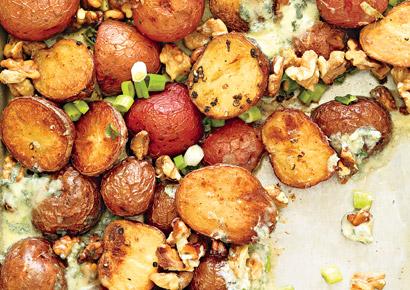
- 1 pound thin-skinned baby potatoes, halved
- 1 1/2 teaspoons olive oil
- 1/4 teaspoon freshly ground black pepper
- 1/8 teaspoon salt
- 1/2 cup coarsely chopped walnuts
- 2 ounces crumbled blue cheese
- 2 scallions, thinly sliced
INSTRUCTIONS
1. Preheat the oven to 425°F. Coat a 9″ x 9″ baking dish with cooking spray or line with parchment paper. Place the potatoes in the prepared dish and toss with the oil, pepper, and salt. Turn cut side down in the pan. Roast for 30 to 35 minutes, or until very tender and lightly golden on the underside.
2. Meanwhile, put the walnuts in a small baking pan or ovenproof skillet and place in the oven to toast for 6 to 8 minutes. Tip into a bowl and let cool. Add the blue cheese and scallions and crumble with your fingers.
3. When the potatoes are done, turn them over and sprinkle evenly with the walnut mixture. Bake for 5 minutes longer, or until the cheese is melted.
*Chef’s Notes – MAKE IT A FLAT BELLY DIET MEAL: Add 3 ounces lean broiled flank steak (165). Serve with 1/2 sliced apple (39).
NUTRITIONAL FACTS PER SERVING
CALORIES ~ 242.7 CAL
FAT ~ 15.5 G
SATURATED FAT ~ 3.8 G
SODIUM ~ 278.8 MG
CARBOHYDRATES ~ 21 G
TOTAL SUGARS ~ 1.8 G
DIETARY FIBER ~ 3.1 G
PROTEIN ~ 7.6 G
10. Chocolate Almond Macaroons: Not only can you sink your sweet tooth into these cookies without an ounce of guilt, but you’re encouraged to dunk the decadent confections into chocolate sauce before taking a bite. That’s because dark chocolate is packed with antioxidants called flavonols that keep arteries flexible, keep blood pressure low, and—when eaten in small quantities—even improve the way your cells absorb sugar. Just stick to healthy portions—and indulge once a day at most.
INGREDIENTS
- 3/4 cup blanched almonds
- 1/2 cup sugar
- 4 egg whites
- 1/4 cup unsweetened cocoa powder
- 1 teaspoon vanilla extract
- 1/2 teaspoon almond extract
- 1/4 teaspoon salt
- 4 ounces bittersweet or semisweet chocolate
- 1/2 cup whole milk
- 2 tablespoons packed brown sugar
INSTRUCTIONS
1. Preheat the oven to 325°F. Line 2 large baking sheets with parchment paper.
2. Toast the almonds in a large, deep skillet over medium heat, stirring often, for about 3 minutes, or until golden. Tip into the bowl of a food processor fitted with a metal blade.
3. Add 1 tablespoon of the sugar. Process until the almonds are finely ground.
4. Beat the egg whites with an electric mixer on high speed until the whites hold soft peaks. Gradually beat in the remaining sugar until the whites hold stiff peaks. Beat in the cocoa, vanilla, almond extract, and salt. Gently fold in the almonds.
5. Drop the mixture by rounded tablespoons onto the prepared baking sheets, leaving 1″ between each macaroon. Bake for 27 to 30 minutes, or until very lightly browned. Place baking sheets on a rack and let macaroons cool until firm.
6. Make the sauce by heating the chocolate, milk, and brown sugar in a small saucepan over low heat. Stir constantly until melted and smooth. Serve warm.
*Chef’s Notes – A SINGLE SERVING OF THIS RECIPE COUNTS as a Flat Belly Diet Meal without any add-ons!
NUTRITIONAL FACTS PER SERVING
CALORIES ~ 372.4 CAL
FAT ~ 19.2 G
SATURATED FAT ~ 6.6 G
SODIUM ~ 156.6 MG
CARBOHYDRATES ~ 48.6 G
TOTAL SUGARS ~ 41.5 G
DIETARY FIBER ~ 4.8 G
PROTEIN ~ 9.3 G
Copyright ©2012 Rodale Inc. “Prevention” and “Prevention.com” are registered trademarks of Rodale Inc. All rights reserved. No reproduction, transmission or display is permitted without the written permissions of Rodale Inc.

7 Foods You Should Never Eat
Written by Lacy Boggs Renner
Sometimes, even foods that seem healthy can harbor hidden problems that can affect our health and our planet. Here are seven foods you should never eat—and easy swaps to help eliminate them from your kitchen.
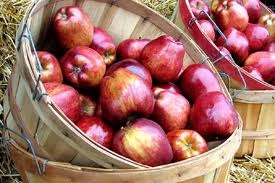 1. Conventional Apples
Right at the top of the “dirty dozen” list, conventional apples are sprayed with the most pesticides of almost any fruit because their growing method means they don’t develop natural pest resistance. Farm workers exposed to these pesticides have documented higher incidents of cancer, and more and more studies are linking pesticides in the body to Parkinson’s disease.
Make the switch: Buy organic apples! If you can’t afford organic, be sure to wash and peel apples before eating (although that won’t rid the fruit of all pesticides).
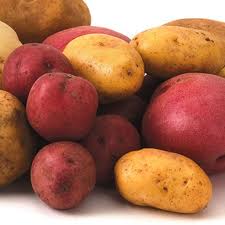
2. Conventionally Grown Potatoes
Think about it: A potato is a root vegetable, and plants absorb nutrients—and other junk—from the soil through their roots. That means that potatoes take up and store more of the chemical fertilizers, fungicides and pesticides that conventional farmers spray on their crops. Plus, after they are harvested, conventional potatoes are treated with another chemical to prevent them from sprouting on the shelf. Because the potato stores these toxins in its flesh, just scrubbing (or even peeling) won’t remove the pesticides and other chemicals.
Make the swap: Buy organic potatoes—even frozen ones.
 3. Corn-Fed Beef
The biggest problems with corn-fed beef start with the corn, because cows evolved to eat grasses, not grains. Eating corn actually makes the cattle sick, requiring that farmers dose them with high levels of antibiotics. But feeding corn to cows isn’t just bad for the cows; it’s bad for the environment, too, as conventionally grown corn requires tons of fertilizers and pesticides that pollute the environment.
Make the swap: Buy grass-fed beef instead of corn-fed and enjoy higher levels of good nutrients like omega-3s and vitamin E, and lower levels of bad stuff like inflammatory omega-6s and saturated fat. Look for cheaper cuts on the bone to help offset the premium price for grass-fed beef.

4. Canned Tomatoes
Tomatoes are a great source of lycopene, which can help guard against agressive cancers like prostate cancer. But the resin used to line tin cans to protect from corrosion by the acid in tomatoes contains bisphenol-A, or BPA, which acts as a synthetic estrogen in the body. It can disrupt the endocrine system and cause a variety of problems, like chromosomal and reproductive system abnormalities, impaired brain and neurological functions, cancer, cardiovascular system damage, adult-onset diabetes, early puberty, obesity and resistance to chemotherapy. Unfortunately, the acidity of tomatoes helps break down the BPA which leaches into the food, making canned tomatoes one of the biggest culprits when it comes to ingesting BPA. Scientists with the National Institutes of Health have concluded that pregnant women, infants and children are at highest risk from exposure to BPA.
Make the swap: The best solution is to look for brands sold in glass jars or Tetra Pak boxes.
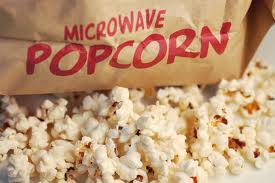 5. Microwave Popcorn
Did you hear about the guy who got popcorn lung from eating more than two bags of microwave popcorn a day? It turns out that even if your popcorn habit isn’t quite as extreme, chemicals like perfluorooctanoic acid (PFOA) found in the lining of the bag and diacetyl, which is used in the butter flavoring, could cause major health problems. Microwaving these chemicals causes them to vaporize, and then the miniature particles can make their way into your popcorn and your lungs if you inhale the steam from the bag.
Make the swap: Pop your own kernels the old fashioned way. You’ll be able to add your own natural seasonings, and as a bonus, unpopped popcorn kernels are dirt cheap.

6. Milk With rBGH
rBGH stands for recombinant bovine growth hormone, and it’s given to dairy cows to boost their milk production. But, it’s been shown to increase udder infections and even lead to pus in the milk! It also increases a hormone called insulin-like growth factor, which is thought to be linked to an increased risk for breast cancer, prostate cancer, colon cancer and early puberty.
Make the switch: Look for milk that says rBGH-free or rBST-free, or buy organic milk. You can also make the switch to a non-dairy milk.
 7. Farmed Salmon
When we think of factory farming, cows or maybe chickens tend to come to mind. But, it turns out farmed salmon live in similarly horrible conditions. In addition to overcrowding, farm salmon are fed a diet of soy, poultry litter (which means chicken poop) and hydrolyzed chicken feathers. They also have been found to be contaminated with all kinds of chemicals—which probably are run off into the pools where they are farmed. Plus, waste from the salmon pens is released directly into the open ocean. The Environmental Defense Fund lists farmed salmon as an eco-worst choice.
Make the swap: Look for wild-caught Alaskan salmon. The brand Wild Catch is almost the only brand which sells canned wild salmon.
Source: © 2010 OrganicAuthority, LLC


 I Am Lady Fab