Blog Archives

Transitioning To Natural Hair On A Budget
Tips and tricks for making the transition to natural hair easy and affordable.
Don’t Opt For Expensive Cons
Quality isn’t always determined by price!
Transitioning on a budget all depends on what works best for you. There are many expensive hair products marketed towards transitioning to natural hair, but most drugstore brands work just as well and cost more than 50 percent less! That being said, try all of the affordable products before you work your way up the cost scale. As long as you know what you are looking for and follow a couple of guidelines, the cheaper products will work just as well as the expensive products.
 Finding The Right Product
Don’t be a product junkie!
For hair types 2, 3a, and 3b, a good clarifying shampoo and deep conditioner should definitely be on your list. Pricing for both items can be as little as a couple dollars apiece. Often times, transitioning to natural hair calls for a remedy such as a deep conditioner. An easy way to enhance a cheaper conditioner is to add special oils or ingredients to make it even richer. Try adding oils such as rose oil or coconut oil.
Type 3C and 4 hair will require a bit more maintenance, especially after a chemical relaxer or straightening treatment which can cause excessive damage to your hair. Many women recommend braiding, twisting, or adding extensions to your hair while waiting for it to grow out. All of these work, but you need to be gentle since kinkier hair has more of a tendency towards breakage. Be sure that you are deep conditioning often, and either reducing the amount of time you wash, going with the no-shampoo method.
Use At Home Remedies
Convenience is cheap!
There are plenty of easy, inexpensive, homemade hair treatments that you can make simply using what is already in your kitchen. One great treatment for your hair is a homemade hot oil treatment. All you need are essential oils including extra virgin olive oil. Heat up a quarter of a cup of oil in the microwave until warm and work it through damp hair.
The real question is not whether it will work (because this remedy will), but the price in comparison. It really depends on every person’s experience with transitioning to natural hair. A decent bottle of extra virgin olive oil can cost between $7 and $20. However, you aren’t using the whole bottle for your hair, and you can still use it for cooking. Pre-made conditioning products, on the other hand, can cost $2 or more.
 Deep Condition Often
Regardless of your hair type, it’s important to not only deep condition, but to also do a deep conditioning and hot oil treatment for your hair.
When you do this, wet your hair first. This will help to seal the moisture in the cuticle, strengthening the hair and causing less frizz.
Most importantly HAVE FUN with it. Experiment with different products and styles to find what works best for you and your hair. And last but not least don’t forget to Accessorize, Accessorize, Accessorize!
Source: Naturally Curly

The Big Chop: Fast Or Slow?
Preparing for the big chop comes down to who you are.
Curlies with perms and those who use relaxers often find that committing to the big chop is a worthwhile solution to going natural. The big chop can be done in two different ways. One being an immediate ridding of all chemically treated strands, and the other being a process of growth. Both options have their pros and cons, but either way, the big chop is all about cutting off all your hair that has been treated with chemicals and allowing your natural hair to grow out.
While there are a couple of different methods for getting a big chop, you should know that this is a real commitment. The grow out period may take some getting used to, but in the end, the natural, thick, and full head of hair that you will wind up with will turn heads and expose your natural beauty.
Cutting It All Off
Literally, THE Big Chop
Curlies who wish to go all natural immediately choose to big chop by cutting all the chemically treated hair off at once. This is done by cutting the hair within a couple inches of the scalp, leaving only the natural hair behind. Depending upon how much natural hair you have, you can either cut it or shave it. This is a very drastic change, and you should think it out carefully before making this leap.
You can either cut your hair yourself, or have a stylist do it for you. Either way, the results will be immediate and will last a while, giving you ample opportunity to play around with short, curly hairstyles as the grow-out process begins.
 Transistioning To Natural Hair
Slow & Steady
For those curlies with perms or relaxers who don’t want to make such a drastic or immediate change, there is the transition method. Growing your hair out without adding more chemicals will allow you to perform the big chop without losing as much hair all at once.
This method will allow for longer hair, but you may have hair that has a very different texture on the top than it does on the bottom. However, as with anything else we curlies decide to do, there are ways to solve this problem. Headbands, braids and ponytails can be used to mask the differing styles of our hair.
Some people who choose transitioning to natural hair will then do the big chop when their hair is long enough for comfort. Some will go for a shorter style in order to rid themselves of the chemically treated hair sooner, while others will wait until their hair is longer before deciding to cut the chemically treated strands off. All in all, it completely depends on your comfort level with shorter strands.
Are You Ready?
The thing to remember about the big chop is that it’s all about your personal style.
Give careful thought to this while weighing the pros of saving money at the salon, time in front of the mirror, and an overall sense of freedom with the cons of having shorter hair for a time or having to cover up a two-tiered style.
Have you already transitioned or done the big chop? Tell me about your experience, and why you chose the method you did?
Love You Much, Sunshine

Going Natural—Everyone’s Doing It
For the NaturallyCurly bunch, going natural is something many have worked for and many have achieved. For the rest of the population, it’s an up and coming trend to look for. Numerous studies have shown that 65% of the world is naturally curly, but should embracing that texture really be something that we consider a trend?
Going natural can be a long process that takes many months to get adjusted to. It’s a big decision for many people, especially for the women who are worried about what the men in their life will think of their new ‘do.
So what’s the rave about going natural? “Glamour” magazine did a recent article about the benefits of going natural and it has generated a lot of natural buzz.
You’ll Cut Back On Trips To The Salon
The less heat you are applying to your hair, the less you need to go to the salon to get your ends trimmed. If you are a curly who goes for a routine color, you can also cut back on how many times you go in for a touch up. Keeping your hair curly helps to hide roots that are peeking through because of the lift you have throughout your hair. What’s the newest way to save money dedicated to salon trips? Go natural!
Styling Is Fast
Curlies are often told that they have it easy because being natural doesn’t require much work. While we all know that isn’t true, for myself, styling is much quicker. I don’t depend on a hair dryer or straightener any longer. All I really need are my fingers for scrunching and a microfiber towel. My two styling tools are extremely simple and especially cheap. Going natural means you can take all of those styling tools out of the bathroom to make room for your new product!
Going Natural Is Better For The Environment
No, really! I knew being natural was much better for my hair, but who knew that it actually improves the environment? If you pass on the blow dryer every day for two years, you have basically planted a tree! Two years might seem like a long time, but if you typically  blow-dry for 30 minutes consider it only taking one year.
Many celebrities have been rocking their natural looks at red carpet events lately, making going natural look like a new trend. While it is awesome that so many people are going natural and sporting curly ‘dos, don’t let the idea that this is a new trend fool you.
Going natural is a commitment. You have to decide that showing off the real you is exactly what you want to do, because it is no easy task. You will spend lots of time on trial and error simply because you have no idea what ingredients your hair really loves.
Deciding to go natural is more like a lifestyle change, but once you decide to flaunt what you’ve been given, you will never go back! It will be exhilarating and the first time you get a compliment on your natural hair, you will be on cloud 9 and remember why you did this in the first place.
Need some help deciding if going natural is right for you? Check out these transitioning blogs to see the struggles other women are going through during their decisions, as well as how they are overcoming them.
Source: Naturally Curly

10 Tips for Transitioning to Natural Hair
So for the past 5 months I have been transitioning from relaxed hair. My last relaxer was February 2012 and I plan to do the “BC” A.K.A Big Chop on August 4, 2012. I honestly have been enjoying the experience thus far and I can’t hardly wait to FULLY see my natural curls. I actually have a girlfriend who has been natural for 10+ years who talked to me about her experience of going natural. One thing from our conversation that still rings clear in my head is when she told me,
“Once you get into it & fully go natural. You are going to ask yourself, What took me so long?”
And she is so true. I am Soooo In Love with my hair! Even my Sweetie says he loves my hair better natural. Who Knew? So to all the transitioners and the ones who are considering going natural this post is for you.
10 Tips For Transitioning To Natural Hair
1. Make The Decision To Go Natural
Want to go natural with or without doing the Big Chop? Transitioning to natural hair is a simple process of growing out your natural texture before cutting off the processed or damaged ends.
But don’t set a time just yet. You don’t have to know when you’ll rock your 100% natural hair right away! Give yourself about 4 months. By then you should have enough growth to get excited.
2. Find Your Go To Transitioning Style
The goal is to blend two VERY different textures of hair into one. Try a bantu knot out or a natural girl’s favorite: the twist out.
3. Detangle When Hair Is Wet
Always detangle when your hair is wet and slippery with conditioner with a wide-toothed comb. Start at the ends and work your way up.
 4. Keep Your Scalp Clean
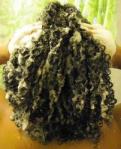
You’ll have to do some experimenting, but cleanse your scalp anywhere from every 2 days to every 2 weeks.
5. Keep Your Hair Moisturized
Dry hair breaks. Nothing beats water when it comes to moisturizing hair, but you can also add your favorite natural hair products on top to seal it in.
6. Get Use To Deep Conditioning
Hair masks are no longer a special treat! Naturally curly hair usually doesn’t lack protein, so stick with deep moisturizing treatments.
7. Wind Down Your Heat Usage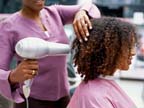
No need for a blow dryer or flat iron any more. Try air drying all of your styles instead.
8. Protect Your Edges
Avoid transitioning styles that put too much tension on your temples and the nape of your neck. The hair there is usually finer, thinner and more delicate!
9. Be Gentle!
The point where your natural texture meets your straight hair (it’s called the line of demarcation) is THE weakest part of you hair. Take your time when you detangle and style your hair.
 10. Gradually Cut Your Processed Or Damaged Ends
Depending on the length you had to start with, get a good trim each month. Remember to use hair shears and not regular scissors!
Remember: NOT all hair is created equal. What may work for me may be different for you. Use different hair products and styles until you find something that works for your hair type and texture. These tips are designed to nurture your naturally curly hair, because in the end, THAT is what you’ll be keeping. Good luck and congrats on going natural! I’m here to help!
Source: Naturally Curly


 I Am Lady Fab