Blog Archives

4 Major Causes Of Hair Breakage
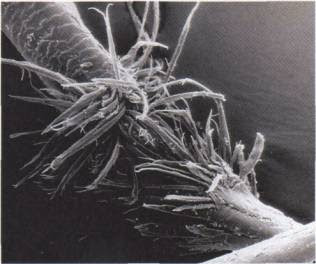
Healthy hair is important to women regardless of hair type or texture. Do you know any woman who wants to walk around with bald spots or hair that is falling out and/or shedding excessively? Chances are you don’t. If not taken seriously, breakage can cause lasting affects on your hair’s health.
1. Hairstyles – If there is tightness or tension on your scalp from any style chances are you will suffer from severe breakage. Although hair is comprised of protein, keratin to be exact – it is fragile especially around the nape and crown. If there is tugging, pulling, pressure, tightness this can lead to bald patches.
From my own personal experience I can tell you that the way you choose to style your hair is important in preventing and/or minimizing breakage. Recently, I wore synthetic extensions styled in braids for two months. At the time, I had them done I was wincing in pain at the tightness of the braids on my scalp. I suffered major breakage at the crown of my head as a result.
2. Styling Tools – Excessive use of heat related tools like blow dryers, flat irons, curling irons, hot rollers, etc will weaken your hair’s cuticle. Limit the frequency of usage and minimize the length of time the heat is in contact with your hair. If you are using heating tools excessively make sure to deep condition your hair on a weekly basis.
3. Manipulating Wet Hair – If your hair is wet try to minimize its manipulation. Wet hair is more susceptible to breakage than dry hair. Use a detangler to reduce tangles and knots. Also, use a wide tooth comb to section and detangle. If a brush must be used, make sure to start at the ends and work your way up while holding your hair taut at the base.
4. Styling Products – The excessive use of chemical processes like coloring, straightening, and bleaching will dry your hair out if not maintained properly which will in turn cause, brittle, vulnerable hair susceptible to breakage. Limit the use of these products and be sure to condition accordingly when necessary.
Of course there are other factors that also contribute to hair breakage – such as illness and/or nutrition. However, these four factors are controllable by you. If you are able to minimize these causes you will be doing you and your hair a great service.
What was the culprit?
What are you doing to remedy things?

Protein Treatments vs. Cholesterol Treatments
QUESTION: What is the difference between using a protein treatment versus a cholesterol treatment as a form of deep conditioner?
ANSWER: GREAT Question! Think of the proteins and cholesterols as different yet necessary rooms in your house of healthy hair practices. The bathroom is different from the kitchen but a house is not complete without both!
PROTEINS
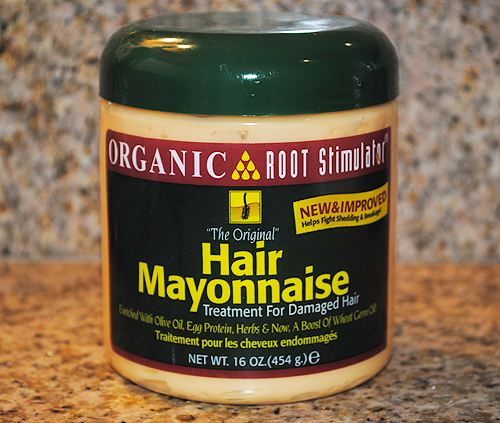 Proteins are the large biological molecules that make up the hair. You get proteins from the foods you eat such as eggs, dairy, and lean meats. When your hair is damaged, it can be fortified (strengthened) by topical protein treatments. Unhealthy hair is typically knicked, broken, and damaged. This damage leaves the hair weak and lackluster. Proteins can fortify damaged hair by filling in the knicks or damaged areas. Think of proteins as you would wall putty. Putty is a superficial fix that goes over the hole to cover and thus fortify the holed area of the wall. Proteins perform a similar function. Protein treatments act as a superficial fix that goes over the hair to cover and thus fortify the knicked/damaged area. To that same point, if your hair is not damaged, such a fix simply sits on top of the knick and creates unnecessary build up. This is why you should avoid protein treatments when they are not necessary.
Try it!: If your hair is broken, damaged, and lackluster, apply a protein treatment to fortify the knicked areas and add shine and luster to your tresses.
CHOLESTEROLS
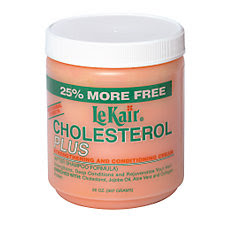 Cholesterols are fats (lipids) and they help to feed/ strengthen the hair. Fats are jam packed with the nutrients your hair needs. Cholesterol treatments are great TOPICAL treatments for the hair. They are also jam packed with vitamins and nutrients. Cholesterol treaments are only topical in nature. Ingesting/eating additional cholesterol as part of your diet is NEVER a good way to improve the health of the hair (or body)!
Try it!: Try prepooing or deep conditioning with LeKair Cholesterol. You can pick it up in your local WalMart or your local beauty supply store. While there are many brands of cholesterol available, I find LeKair to be thicker and richer than most brands.
Source: Journey 2 My Roots

What Products Do Natural’s Really Like?

This was the question: Let’s say you were going on a two week vacation, and when you get there, you will not be able to buy hair products. Your hair cannot be in a protective style, where your hair is safely tucked away, but your beautiful hair is going to be free. You can only take 3 products (your brush, comb and bobby pins are already packed!)
What 3 products would you take?

The Curly Hair Oil Roundup
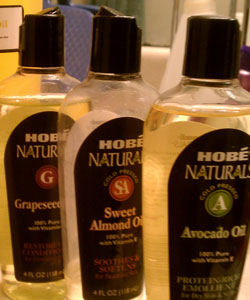
A guide to ten popular, natural hair oils for curly, kinky and wavy hair.
When it comes to maintaining your curly hair, you may be seeing lots of products bombarding the market touting all sorts of ingredients. Especially when it comes to the sheer number of natural hair oils, it can be confusing to know which one may work best for your hair. Although you can learn by trial and error, it’s always a good idea to do a little research before trying new ingredients.
To give you a brief introduction on hair oils, there are a couple main types of oils you’ll come across: carrier oils (vegetable/nut/seed derived oil, usually odorless, can be used alone or used to transport or “carry” the scent and properties of an essential oil) and essential oils (highly concentrated scent, contain specific therapeutic benefits, normally extracted from plant sources and diluted with carrier oils).
Examples of essential oils widely used in the natural hair community are rosemary, tea tree, lemon, eucalyptus, lavender and sandalwood. Of course there are many others, but these are found in many natural hair products for their healing and restorative properties.
On their own, carrier oils have their own individual benefits and are extremely popular among curly girls. Whether you have type 2 waves, type 3 curls, or type 4 coils, there’s an oil out there that can benefit your tresses. To help you navigate, here’s a list of some of the more popular, and a few obscure, natural oils on the market.
- Coconut Oil (Extra Virgin) Light and non-greasy, coconut oil can easily be used by all hair types. Coconut oil is one of the few oils that can actually penetrate the hair shaft. There are several types of coconut oil available, but go for the extra virgin (EVCO). This oil is typically clear in its liquid form and a white color that is solid at room temperature. Shelf life: approximately 1-2 years.
- Olive Oil (Extra Virgin) This multipurpose oil is a staple in many naturals’ hair care regimens. Not only is olive oil a great pre-poo and hot oil treatment option, extra virgin olive oil (EVOO) works wonders to seal moisture in and can add a kick to your conditioning routine too. If you have finer hair you may want to use just a small amount in order to not weigh the hair down. Shelf life: up to 2 years.
- Castor Oil (Jamaican Black Castor Oil) A heavier oil great for tighter coils, castor oil can be great for sealing moisture into your hair. Many have also used this oil to help regain thickness around thinning hairlines. A little definitely goes a long way with this oil; too much can leave your hair heavy and weighed down. Another popular variation is Jamaican Black Castor Oil (JBCO). This less refined version can be used to encourage hair growth as well as protect and seal your ends. Shelf life: indefinite.
- Grape Seed Oil This super light and moisturizing hair oil can benefit all types of curls. A natural heat protectant, grape seed oil can actually be used as a thermal agent up to 425 degrees when blow drying or flat ironing. Apply a bit throughout the hair before applying heat to give your hair added shine and protection. This oil works great to strengthen each strand, increase manageability and can also be used to combat dry scalp and dandruff. Shelf life: approximately 1 year
- Jojoba Oil Closely matching the sebum, your hair’s natural oil, jojoba oil is a great staple in your natural hair care routine. This hair oil can be used to balance oil production at the scalp, aiding overproducing glands that cause oily hair. Jojoba is also non-greasy and gives your hair a healthy shine. At this time, however, jojoba oil is very scarce and that is reflected in the skyrocketing price. Shelf life: can be indefinite.
- Sweet Almond Oil This light, all-purpose oil is great for all hair types and offers many benefits to naturally curly hair. Sweet almond oil works great as a sealant, so apply a small bit on top of your moisturizer to lock in the moisture. It’s also great for improving manageability by smoothing the hair shaft. Shelf life: approximately 1 year.
- Avocado Oil This super nutrient rich oil is heaven for thick haired curlies. Chock full of natural goodies like amino acids, minerals, and vitamins, avocado oil can help strengthen hair and enhance deep conditioning treatments. Try mixing a bit of this hair oil with your favorite conditioner as a deep treatment, adding a plastic baggy or heat cap for added conditioning. Since this oil is a bit heavy and slightly oily, it’s best for thicker or more tightly coiled strands. Shelf life: approximately 1 year.
- Argan Oil This rare oil is making waves in the natural hair community for its moisturizing properties. Easily absorbed and quite nourishing, this oil is great for your hair, skin, and nails too. For curly girls, argan oil helps with manageability and can also strengthen the hair. It can be pricey, but a little goes a long way. Shelf life: approximately 2 years.
- Ayurvedic Oils For ages these hair oils have worked wonders across the globe and they’re a wonderful option for naturals. Some of the more prominent oils are amla, neem, brahmi, and bhringaraj; each of these distinctive oils offer their own unique benefits for your curls. For example, amla oil is great to strengthen and condition the hair, neem oil is excellent for tackling dandruff, brahmi can be used to stimulate hair growth and bhringaraj is great to combat shedding and breakage.
- Rose Oil A lightweight oil, rose oil is perfect for wavies or those with thinner hair. Rose oil strengthens hair at the root, protects against frizz and adds shine.
Source: Naturally Curly

Three Cheers For The Transitioner!

A dedicated Transitioner takes the time to learn whether her hair favours Olive Oil, Jojoba Oil or maybe one of those beautiful butters she has the pleasure of choosing from. She doesn’t resent her new growth but, loves it no matter what texture it is, giving it the love and affection it desires.
Having to deal with people trying to ‘keep it real’ about how they feel about her new hair is not rare for the Transitioner. They may catch her of guard at times, but she remains composed and lifts her head high because she is confident in her decision to go natural – this isn’t a fad, to please the next person, and definitely not a cry for help (I hope!).

The Many Stages of Our Natural Journeys

Tammy Goodson of CurlyChics
You’ve somehow been introduced to the natural hair world, whether it was through your stylist or perhaps you admired the way a close friend rocked her bold afro with such confidence; either way your curiosity was piqued. That curiosity turns into the decision to take action and so the journey begins.
Stage 1 – The Dive
You make the decision to “go natural”. You dive right in, head first, literally, with the big chop or proceed subtly by transitioning. You’re excited because it’s the beginning of something new yet apprehensive because of any preconceived notions you may have about the process.
Stage 2 – Still Unsure
If you’re transitioning, you’re dealing with multiple textures, finding the right products through process of elimination which also means elimination of lots of cash, and looking forward to the day when those relaxed ends are persona non grata! If you big chopped, in addition to similar frustrations of a transitioner, you are contending with the stark contrast from your normal look and no longer hiding behind your hair.
Stage 3 – Arrived ….ehhhh?
You’ve finally arrived, no more relaxed ends and it feels great, but now what? Your big chop has now become its goal length (whether that’s a twa or longer) but you haven’t quite discovered your mane’s true personality. There’s a whole new head of hair to get familiar and bond with and you can quickly get overwhelmed. You take to the blogs and vlogs for more information than you even know what to do with and continue the business of figuring it all out.
Stage 4 – Seasoned Vet
After some time of experimenting and self matriculating, you are that unapologetic natural girl that everyone confers with, the one to whom new naturals look to for guidance and inspiration. Have you mastered all things natural? No, there are always lessons to learn, but you’re a lot further than you were a few years ago and even more comfortable in your own skin. It’s when you learn that starting any journey can be taxing and frustrating and contained in those frustrations are possibilities of awesome results.
*Note – these are my experiences, coupled with testimonies of other naturals I have interviewed. Of course, not everyone goes through these stages in the same order and some phases may be combined and/or omitted.
Sharing hairstories and life experiences from a curl’s perspective. Find Tammy at her blog, Curlychics, on Twitter, and Facebook.
Source: Curly Nikki

Transitioning: Ignoring The Urge To Return To The Lye

by Bennii Blast of The Culture Pine
I often see a lot of transitioners appearing to be at their wits end when they reach that point in their transition, where the call to reach for the box of relaxer is looking like it is about to be answered. Although I have surprisingly not had the itch to go back to relaxing yet, I have had this dream, well nightmare, where I accidentally relax my hair. How one accidentally relaxes their hair I do not know, but I remember being pissed in my dreamworld and waking up feeling for my hair to make sure everything was as it should be. That sigh of relief I tell ya…pure madness! It just reminded me of how much work and patience goes into transitioning, and how mad I would be at myself if all that commitment went to waste. It confirmed that going back to the creamy crack is a definite no no for me right now!
Anyways…I wanted to be of aid to those who have reached this point in their transition and may just need some encouragement to keep moving forward with their journey:
#1 Don’t spend HOURS looking at photos where you were relaxed
There have been moments where I catch myself looking at old photos and I have to remind myself to keep it moving. If you are experiencing a weak moment, don’t torture yourself further by bringing out those old photo’s where you were still relaxing. This could stir up emotions you felt at the time of the picture where you may appear happier, and because your hair happens to be relaxed in the picture, you may wrongly connect the two an make an irrational decision. Instead, start collecting new photo’s of your transitioning hair (especially when you have successfully pulled of a new style from that YouTube tutorial!) so that you can look to those for encouragement to keep going!
#2 Try an alternative
Instead of making such a drastic change as returning to the use of chemicals, why not try something less permanent such as flat ironing occasionally or roller sets? This may help you to overcome this part of your transition without having to give into that urge!
#3 Reward Yourself!
Transitioning can be a roller coaster of a journey and requires more patience than some of us even knew we were capable of having! So instead of focusing on the negatives, try celebrating the positives by rewarding your accomplishments so far. Acknowledge the efforts you have put in already, and allow yourself that new lipstick you have had your eyes on!
#4 That ‘Good Hair’ documentary
As cheesy as it sounds, watching this documentary was the kick up the backside I needed to finally start my transition, and I know I’m not alone in that! When you are at a low point, watch the documentary and hopefully it will stir up those emotions that made you want to kick the relaxers out of your life. Remember the coke can? Sheeesh!
#5 Spend time looking at naturals and fellow transitioners
Happiness can be infectious! If you spend some time surfing the web reading the testimonials of those who have been in your shoes and are now completely natural, seeing how happy they are with their decision will no doubt rub off on you and remind you that this thing is not impossible. Collect some pictures of smiling naturals whenever you feel that relaxer urge coming on!
#6 Write a list of all the reasons why you decided to transition
As you get further into your journey, the reasons why you started it in the first place may become blurred along the way. This can make you question whether continuing to go any further with your transition is really necessary. For those times where you feel you may be reaching for that box of chemicals, make a list of all of those reasons that you decided to start transitioning. This will keep your goals fresh in your mind and motivate you in achieving them.
Feeling like you are ready to go back to relaxing does not make you a terrible transitioner! We all have our weak moments and sometimes just need some encouragement to keep the wheel spinning. At the end of the day, you have to remember that doing what is best for you is what is most important!
Happy Transitioning =)
Source: Curly Nikki
How do you stay motivated during your transition?

Transitioning To Natural Hair On A Budget
Tips and tricks for making the transition to natural hair easy and affordable.
Don’t Opt For Expensive Cons
Quality isn’t always determined by price!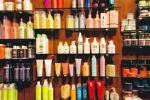
Transitioning on a budget all depends on what works best for you. There are many expensive hair products marketed towards transitioning to natural hair, but most drugstore brands work just as well and cost more than 50 percent less! That being said, try all of the affordable products before you work your way up the cost scale. As long as you know what you are looking for and follow a couple of guidelines, the cheaper products will work just as well as the expensive products.
 Finding The Right Product
Don’t be a product junkie!
For hair types 2, 3a, and 3b, a good clarifying shampoo and deep conditioner should definitely be on your list. Pricing for both items can be as little as a couple dollars apiece. Often times, transitioning to natural hair calls for a remedy such as a deep conditioner. An easy way to enhance a cheaper conditioner is to add special oils or ingredients to make it even richer. Try adding oils such as rose oil or coconut oil.
Type 3C and 4 hair will require a bit more maintenance, especially after a chemical relaxer or straightening treatment which can cause excessive damage to your hair. Many women recommend braiding, twisting, or adding extensions to your hair while waiting for it to grow out. All of these work, but you need to be gentle since kinkier hair has more of a tendency towards breakage. Be sure that you are deep conditioning often, and either reducing the amount of time you wash, going with the no-shampoo method.
Use At Home Remedies
Convenience is cheap!
There are plenty of easy, inexpensive, homemade hair treatments that you can make simply using what is already in your kitchen. One great treatment for your hair is a homemade hot oil treatment. All you need are essential oils including extra virgin olive oil. Heat up a quarter of a cup of oil in the microwave until warm and work it through damp hair.
The real question is not whether it will work (because this remedy will), but the price in comparison. It really depends on every person’s experience with transitioning to natural hair. A decent bottle of extra virgin olive oil can cost between $7 and $20. However, you aren’t using the whole bottle for your hair, and you can still use it for cooking. Pre-made conditioning products, on the other hand, can cost $2 or more.
 Deep Condition Often
Regardless of your hair type, it’s important to not only deep condition, but to also do a deep conditioning and hot oil treatment for your hair.
When you do this, wet your hair first. This will help to seal the moisture in the cuticle, strengthening the hair and causing less frizz.
Most importantly HAVE FUN with it. Experiment with different products and styles to find what works best for you and your hair. And last but not least don’t forget to Accessorize, Accessorize, Accessorize!
Source: Naturally Curly

The Big Chop: Fast Or Slow?
Preparing for the big chop comes down to who you are.
Curlies with perms and those who use relaxers often find that committing to the big chop is a worthwhile solution to going natural. The big chop can be done in two different ways. One being an immediate ridding of all chemically treated strands, and the other being a process of growth. Both options have their pros and cons, but either way, the big chop is all about cutting off all your hair that has been treated with chemicals and allowing your natural hair to grow out.
While there are a couple of different methods for getting a big chop, you should know that this is a real commitment. The grow out period may take some getting used to, but in the end, the natural, thick, and full head of hair that you will wind up with will turn heads and expose your natural beauty.
Cutting It All Off
Literally, THE Big Chop
Curlies who wish to go all natural immediately choose to big chop by cutting all the chemically treated hair off at once. This is done by cutting the hair within a couple inches of the scalp, leaving only the natural hair behind. Depending upon how much natural hair you have, you can either cut it or shave it. This is a very drastic change, and you should think it out carefully before making this leap.
You can either cut your hair yourself, or have a stylist do it for you. Either way, the results will be immediate and will last a while, giving you ample opportunity to play around with short, curly hairstyles as the grow-out process begins.
 Transistioning To Natural Hair
Slow & Steady
For those curlies with perms or relaxers who don’t want to make such a drastic or immediate change, there is the transition method. Growing your hair out without adding more chemicals will allow you to perform the big chop without losing as much hair all at once.
This method will allow for longer hair, but you may have hair that has a very different texture on the top than it does on the bottom. However, as with anything else we curlies decide to do, there are ways to solve this problem. Headbands, braids and ponytails can be used to mask the differing styles of our hair.
Some people who choose transitioning to natural hair will then do the big chop when their hair is long enough for comfort. Some will go for a shorter style in order to rid themselves of the chemically treated hair sooner, while others will wait until their hair is longer before deciding to cut the chemically treated strands off. All in all, it completely depends on your comfort level with shorter strands.
Are You Ready?
The thing to remember about the big chop is that it’s all about your personal style.
Give careful thought to this while weighing the pros of saving money at the salon, time in front of the mirror, and an overall sense of freedom with the cons of having shorter hair for a time or having to cover up a two-tiered style.
Have you already transitioned or done the big chop? Tell me about your experience, and why you chose the method you did?
Love You Much, Sunshine


 I Am Lady Fab